
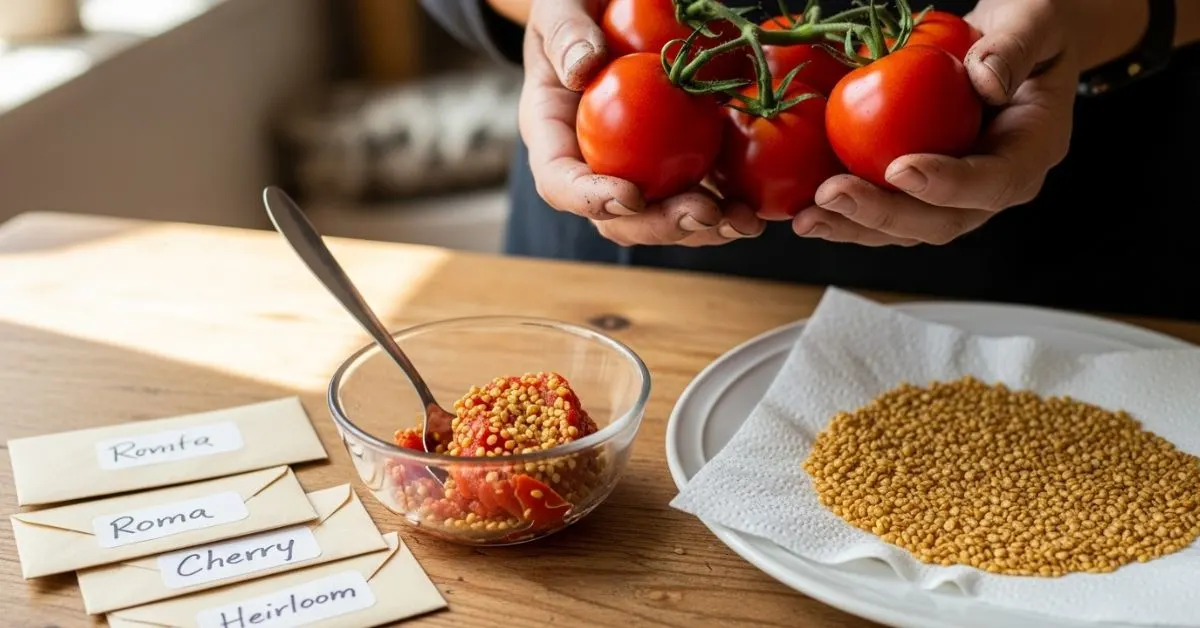
How to Save Tomato Seeds: Step by Step Guide for Home Gardeners
Have you ever thought about saving seeds from your own tomatoes? It’s a simple practice that can save you money, preserve your favorite flavors, and help you grow strong, healthy plants year after year. How to save tomato seeds is a skill every home gardener should learn. Whether you’re growing juicy heirlooms or open-pollinated varieties, collecting seeds ensures that your garden stays productive season after season.
Saving your own seeds also allows you to select the best fruits, protect unique flavors, and become more self-reliant as a gardener. With a little time and attention, even beginners can master tomato seed saving, and enjoy the satisfaction of planting seeds from fruits they harvested themselves.
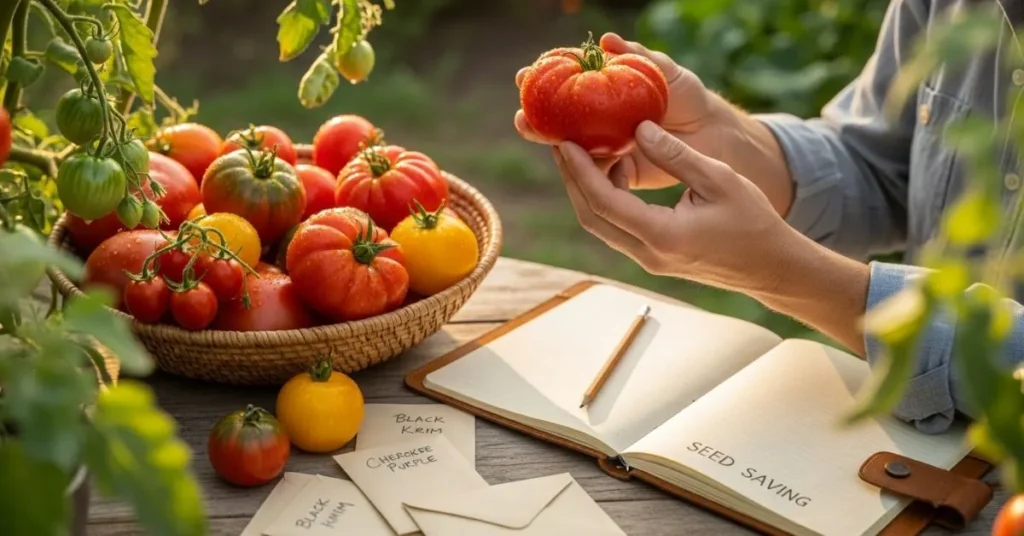
Why Save Tomato Seeds
Saving tomato seeds has many benefits. First, it’s cost-effective. Instead of buying seeds every year, you can reuse seeds from your own harvest. Second, it allows you to maintain heirloom varieties, ensuring the flavors, shapes, and colors you love are preserved.
Home gardeners who practice seed saving also gain control over the quality of plants. You can choose disease-free, healthy fruits and ensure better germination rates for the next season. Additionally, saving seeds fosters a sustainable gardening approach and connects you more deeply with your garden.
By learning how to save tomato seeds for next season, you’re taking a step toward becoming a more skilled, independent gardener while enjoying the long-term benefits of your efforts.
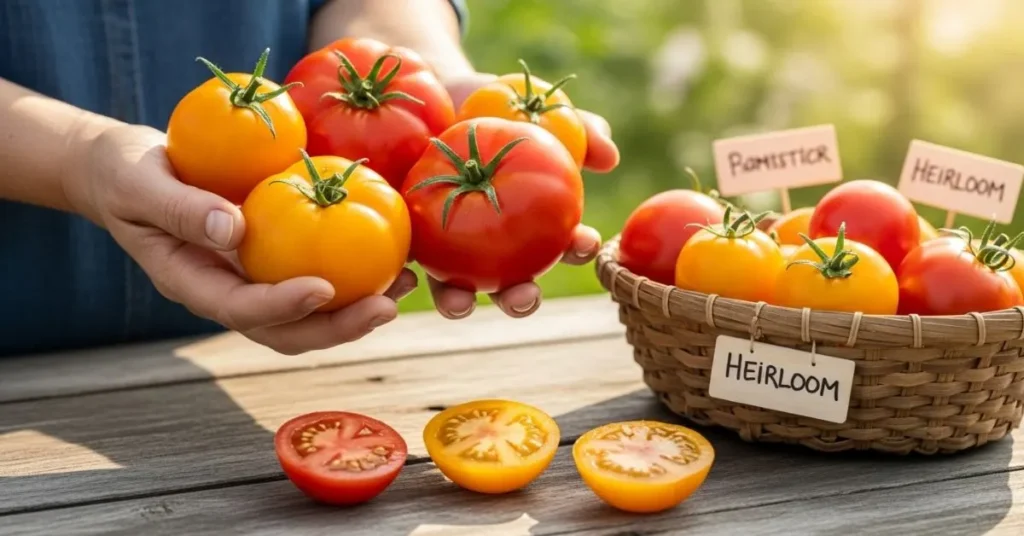
Choosing the Right Tomatoes for Seed Saving
The first step in tomato seed saving is choosing the right fruits. Not all tomatoes produce viable seeds. Focus on healthy, fully ripe fruits that are free from disease. Heirloom tomatoes are ideal because they produce stable, true-to-type seeds, while hybrids may not grow the same as the parent plant.
If you want to learn how to save open pollinated tomato seeds, select fruits from open-pollinated or heirloom varieties. Avoid using store-bought hybrid tomatoes, as their seeds often fail to produce the same results. Choose large, plump fruits with strong color, as they usually contain healthy seeds for planting next season.
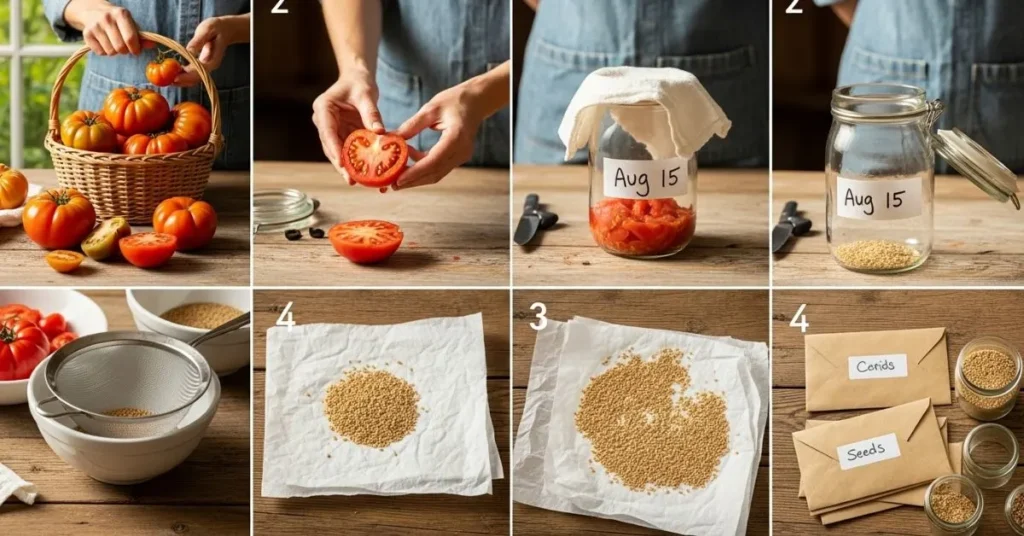
Step by Step Tomato Seed Saving Guide
Here’s a step by step tomato seed saving guide for beginners:
-
Select the tomato: Pick a fully ripe, disease-free fruit.
-
Cut and scoop: Slice the tomato and scoop out the seeds with pulp.
-
Ferment the seeds: Place the seeds and pulp in a jar, cover loosely, and leave for 2–3 days. This removes the gelatinous coating that inhibits germination.
-
Rinse thoroughly: After fermentation, rinse the seeds under water to remove all pulp.
-
Dry the seeds: Spread the cleaned seeds on a paper towel or plate to dry for several days. Avoid direct sunlight.
-
Store the seeds: Once fully dry, place seeds in envelopes or jars. Label with variety and date.
This best method to save tomato seeds ensures high germination rates and healthy seedlings for next season.
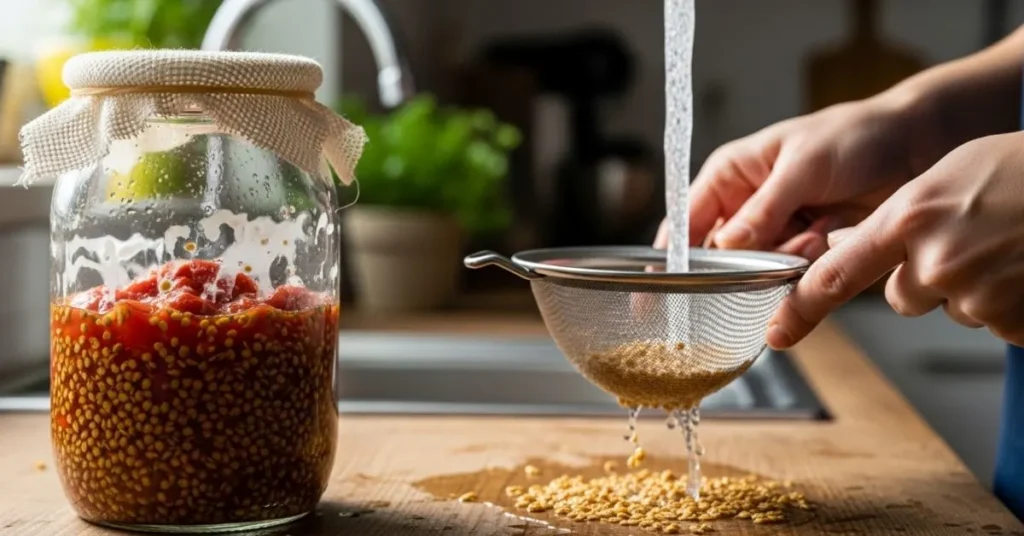
How to Ferment Tomato Seeds to Save Them
Fermentation is a critical step. It removes the gel coating around the seeds and kills some disease organisms. To ferment, place seeds and pulp in a jar, cover loosely, and leave in a warm spot for 2–3 days. You’ll notice a layer of mold forming on top, this is normal.
After fermentation, rinse the seeds carefully. This process is exactly how to ferment tomato seeds to save them successfully and improve future growth. Avoid leaving seeds too long, as over-fermentation can damage them.
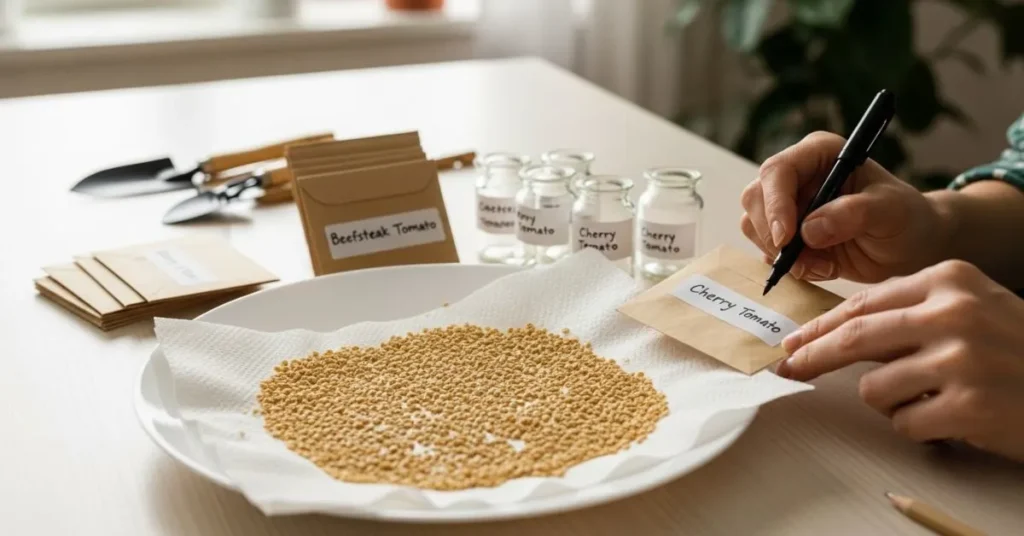
Drying and Storing Tomato Seeds
After cleaning, seeds need to be dried completely. Spread them on a paper towel or plate in a cool, airy place. Never use direct sunlight, as it can reduce seed viability. Once dry, place seeds in labeled envelopes, jars, or small containers.
This step explains how to dry tomato seeds after fermenting and is essential for maintaining quality. For long-term storage, keep seeds in a cool, dark, dry place. This is how to store tomato seeds long term and keep them viable for years.
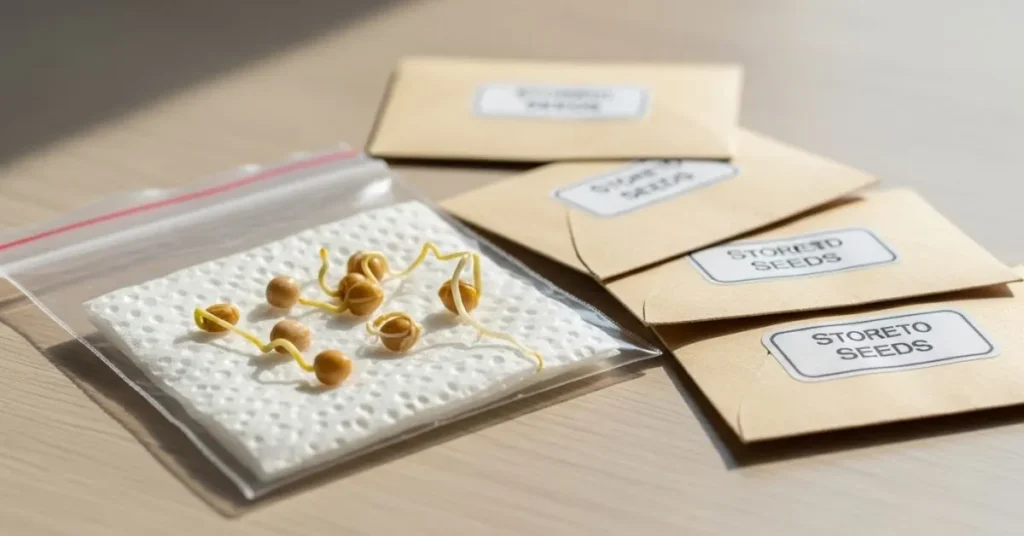
Testing and Maintaining Seed Viability
Before planting, test your saved seeds for viability. Place a few seeds on a damp paper towel, cover, and wait a few days to see if they sprout. This is part of how to keep tomato seed viability high.
Store only healthy, viable seeds. Maintain low humidity and stable temperatures to prevent mold or premature germination.
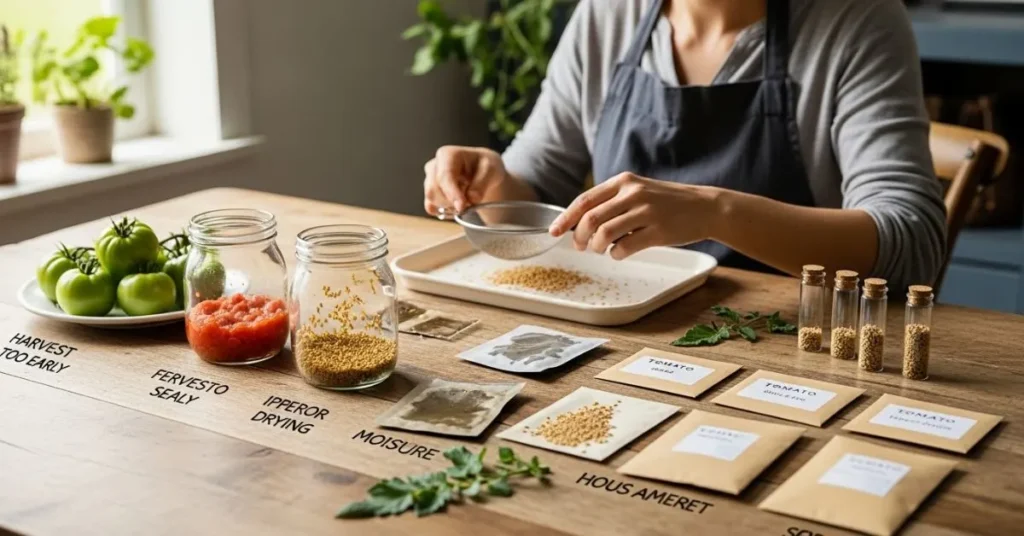
Common Mistakes to Avoid
-
Using unripe or damaged tomatoes.
-
Skipping fermentation.
-
Storing seeds in damp or warm conditions.
-
Forgetting to label seeds.
Following proper steps ensures your seeds are healthy and ready for next year’s garden.
Conclusion
Learning how to save tomato seeds is rewarding for home gardeners. From selecting the right tomato to fermenting, drying, and storing, every step matters. By following these steps, you can save money, preserve heirloom varieties, and enjoy successful gardening year after year.
Start saving seeds this season, and experience the joy of planting seedlings grown from your very own tomatoes. For more gardening tips, check Seeds and Planting and Vegetable Gardening.
FAQs How to Save Tomato Seeds
[sp_easyaccordion id=”934″]