

Easy Ways to Grow Herb Garden from Seeds Indoors and Outdoors
Starting a home herb garden is one of the most rewarding and practical gardening projects you can do. Whether you have a sunny windowsill or a small backyard, learning how to grow herb garden from seeds gives you fresh, fragrant herbs right at home. With a little care, you can enjoy basil, mint, parsley, or thyme all year long, both indoors and outdoors.
Why Growing Herbs from Seeds is Worth It
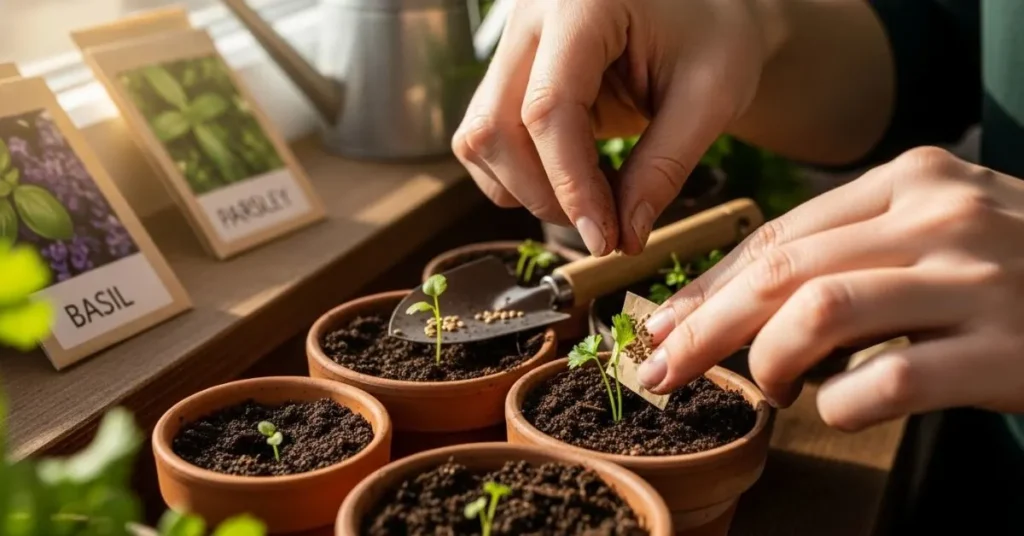
Herbs grown from seeds are often stronger, more flavorful, and much cheaper than store-bought plants. You also get to choose from a wider variety of herbs, from classic basil to rare lemon balm. Starting from seed gives you control over every step, from soil choice to sunlight exposure.
Choosing the Right Herbs for Your Garden
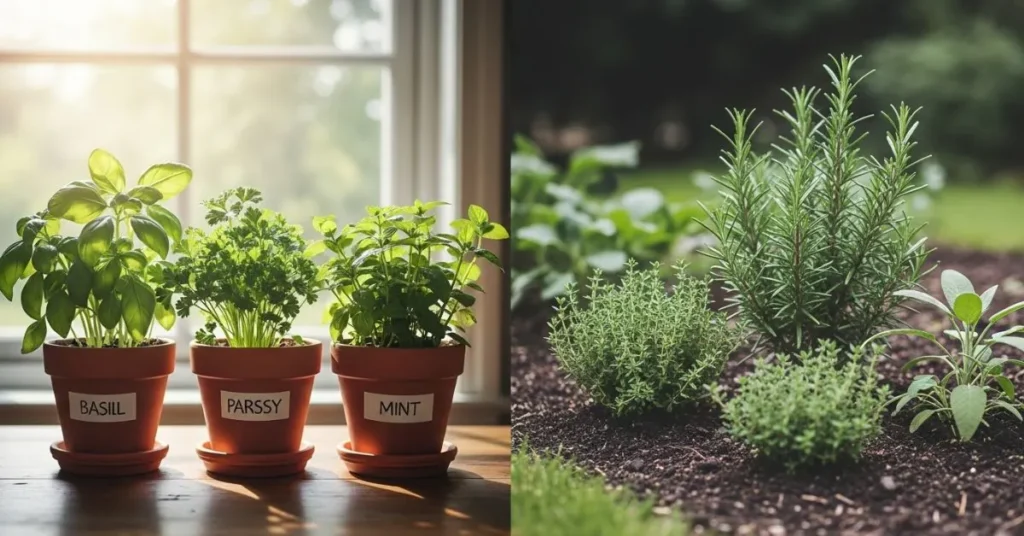
Some herbs thrive indoors while others need outdoor space to reach their full potential. Start by choosing herbs that match your available light and space.
Best herbs for indoor growing:
-
Basil
-
Chives
-
Cilantro
-
Parsley
-
Mint
Best herbs for outdoor growing:
-
Rosemary
-
Oregano
-
Thyme
-
Sage
-
Dill
If you’re growing herbs indoors, choose compact varieties that adapt well to container life. Outdoor gardeners can grow taller, spreading types that enjoy full sun.
Preparing the Soil and Containers
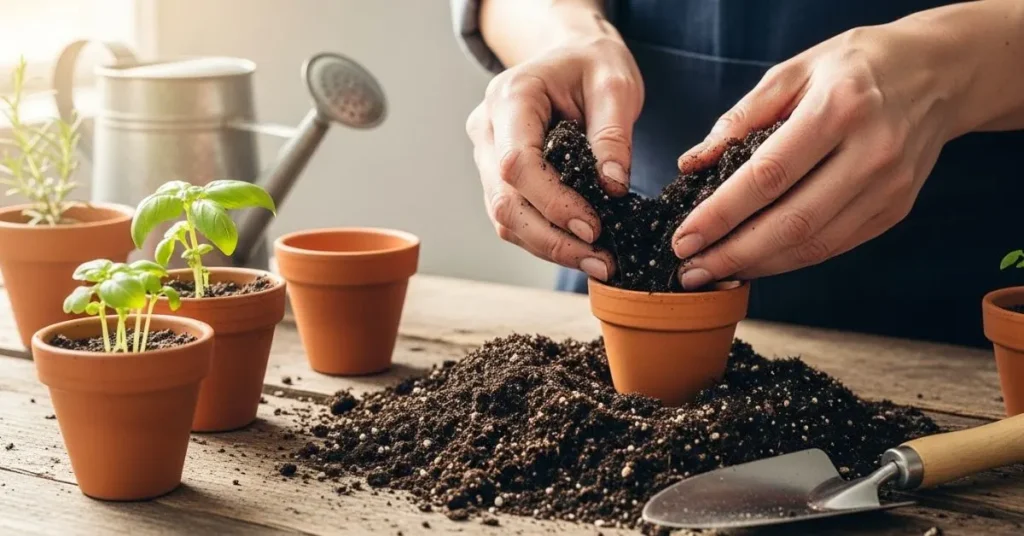
Soil quality determines how healthy your herbs will be. Herbs prefer well-draining soil with organic matter. For indoor pots, use a light potting mix made for herbs or vegetables. Outdoor herbs can benefit from compost mixed into garden soil.
Container tips:
-
Choose pots with drainage holes.
-
Use terracotta or clay pots for better air flow.
-
Keep saucers under pots to prevent mess indoors.
Proper soil preparation ensures that when you grow herb garden from seeds, the roots have the best environment to develop.
Planting Herb Seeds the Right Way
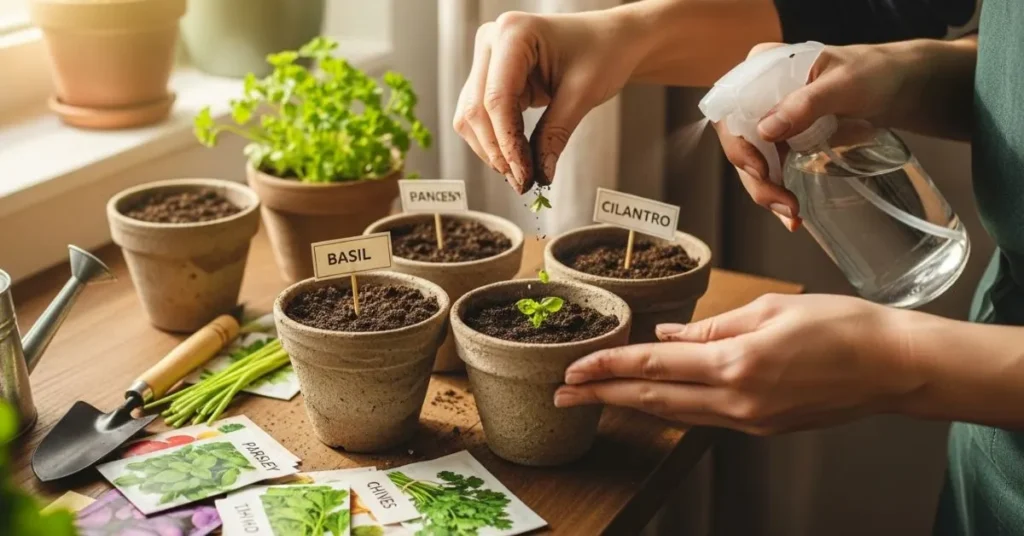
Each herb has its own germination pattern, but there are a few general rules to follow:
-
Read the seed packet for depth and spacing.
-
Sow small seeds (like basil) on the surface; cover lightly.
-
Water gently with a spray bottle.
-
Keep soil moist but never soaked.
Place pots in a warm, bright spot. Most herbs germinate between 65–75°F (18–24°C). For outdoor gardens, wait until frost danger passes before sowing seeds.
You can find detailed sowing times by region at the Royal Horticultural Society’s herb growing guide.
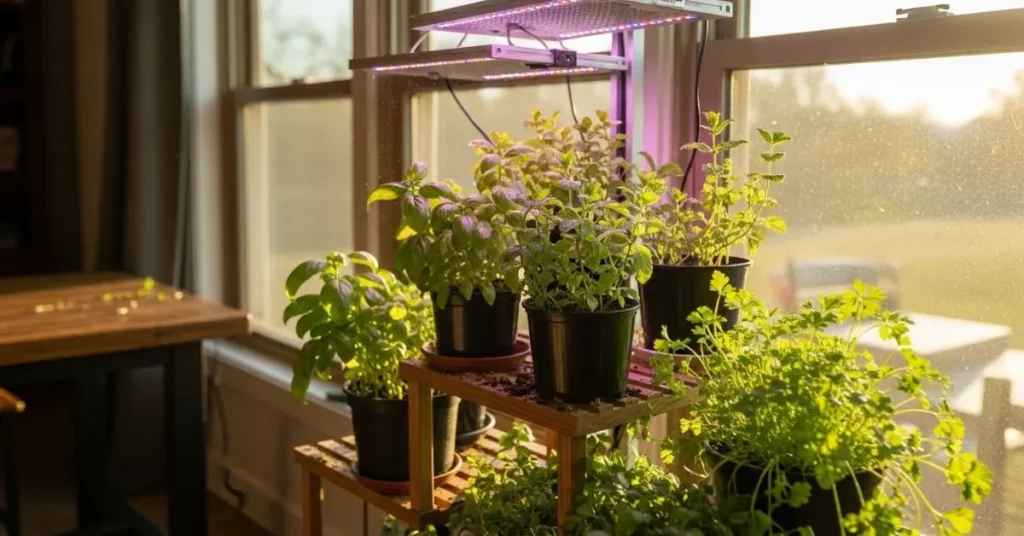
Light and Temperature: The Key to Success
Herbs need at least 6 hours of sunlight daily. If you’re short on natural light indoors, use LED grow lights. Keep lights about 6–12 inches above plants and on for 12–14 hours a day.
Outdoor herbs prefer full sun, but partial shade helps in hot climates. Temperature control matters too, most herbs like mild warmth but struggle in extreme heat or frost.
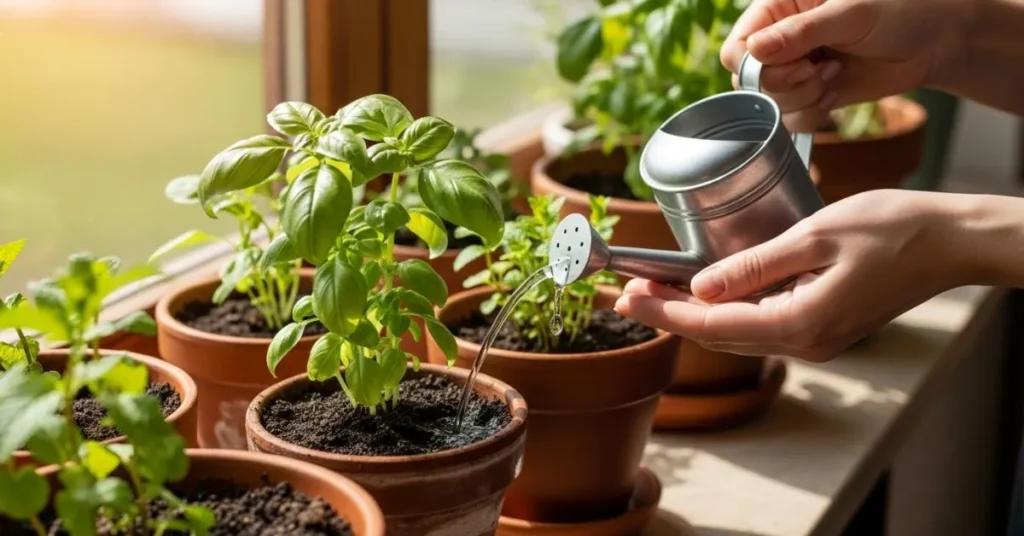
Watering and Feeding Your Herbs
Watering herbs properly is all about balance. Overwatering causes root rot; underwatering stunts growth. The best rule is to check soil moisture with your finger, if the top inch is dry, it’s time to water.
Feed herbs every 4–6 weeks with a mild organic fertilizer or compost tea. Avoid chemical fertilizers, especially for indoor herbs you plan to eat.
You can also check our guide on Grow Vegetables in Pots for container care and watering tips.
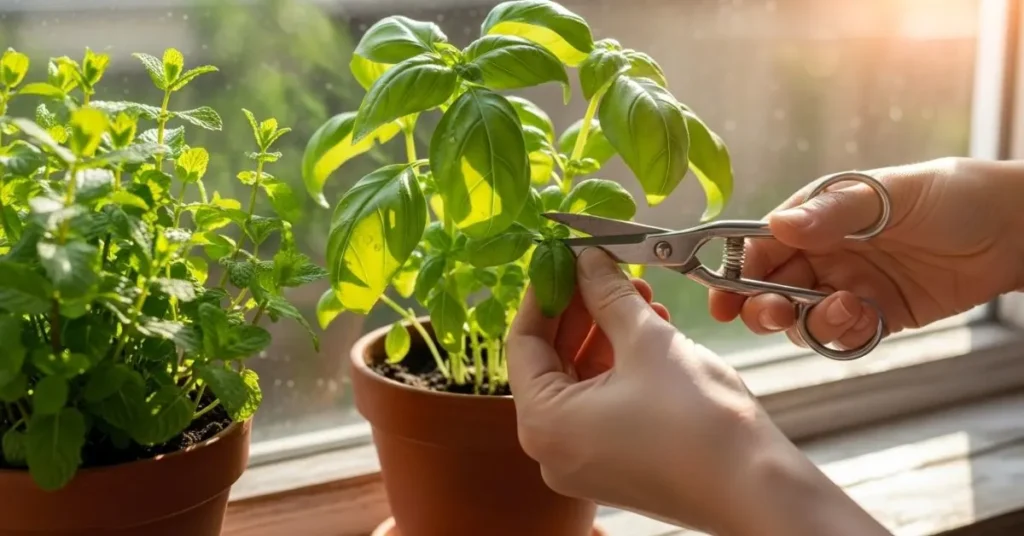
Pruning and Harvesting for More Growth
Pruning is how you get fuller, more productive herb plants. Once your herbs reach about 6 inches tall, start snipping the top leaves. This encourages side shoots and thicker plants.
-
Harvest in the morning when oils are strongest.
-
Never cut more than one-third of the plant at a time.
-
Use clean scissors or pruning shears.
Regular pruning ensures continuous harvest and prevents herbs from flowering too soon.
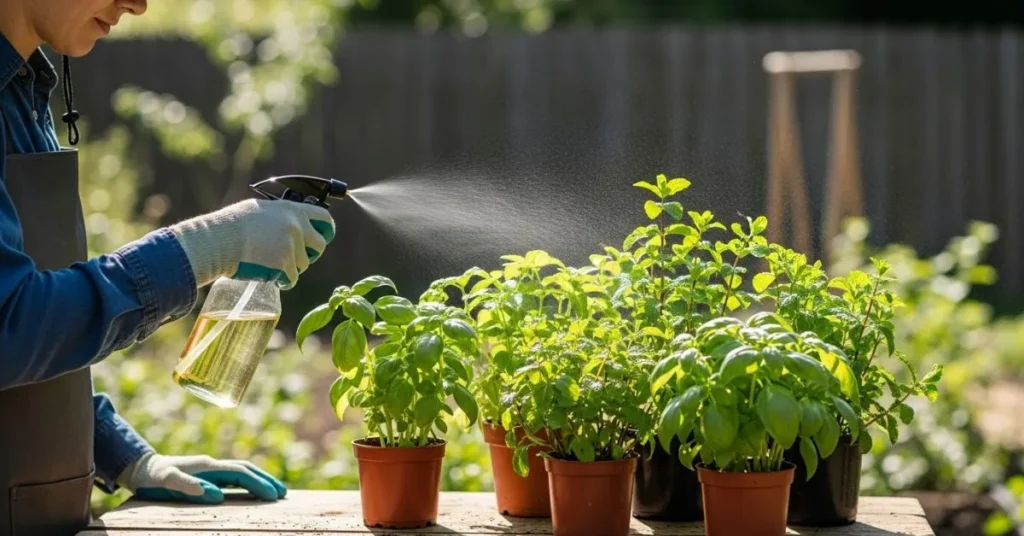
Managing Pests Naturally
Even small herb gardens can attract pests like aphids, spider mites, and whiteflies. Avoid chemicals — they can ruin flavor and harm beneficial insects. Instead, use natural methods:
-
Spray leaves with neem oil or soapy water.
-
Keep good airflow around plants.
-
Introduce ladybugs outdoors for natural pest control.
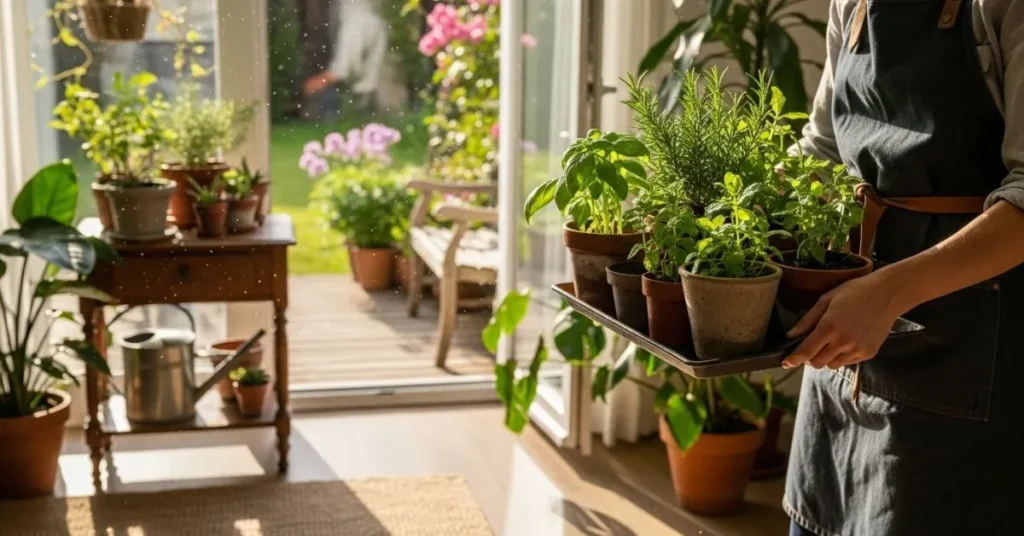
Moving Herbs Between Indoors and Outdoors
If you want to grow herbs year-round, you can move pots between indoors and outdoors as seasons change. Bring them inside before frost, and place them outdoors again in spring. This way, your effort to grow herb garden from seeds pays off for the whole year.
For more seasonal growing advice, check our post on When to Pick Tomatoes.
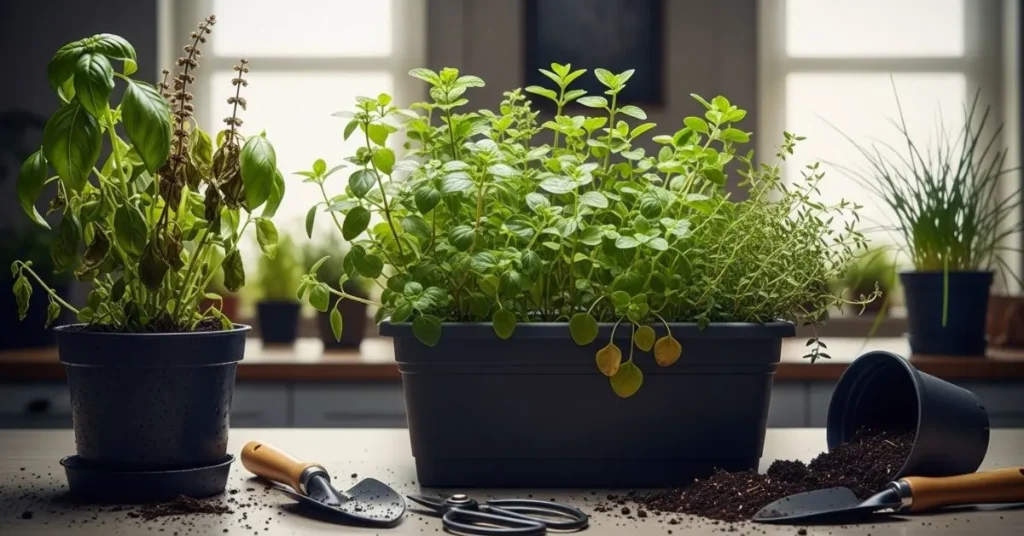
Common Mistakes to Avoid
-
Using garden soil indoors (too heavy for pots).
-
Overwatering small containers.
-
Placing herbs in dark corners.
-
Ignoring pruning schedules.
-
Growing too many herbs at once.
Avoiding these mistakes keeps your herbs healthy and flavorful.
Final Thoughts
Learning how to grow herb garden from seeds isn’t complicated, it just takes a bit of patience and regular care. Whether you’re starting basil on a kitchen shelf or thyme in an outdoor pot, herbs reward you with fresh taste, scent, and beauty all year long.
Gardening with herbs connects you to nature, even in small spaces. And once you see those tiny seedlings turn into green, fragrant plants, you’ll realize it’s one of the simplest ways to make your home feel alive.
FAQs Easy Ways to Grow Herb Garden
[sp_easyaccordion id=”1041″]