
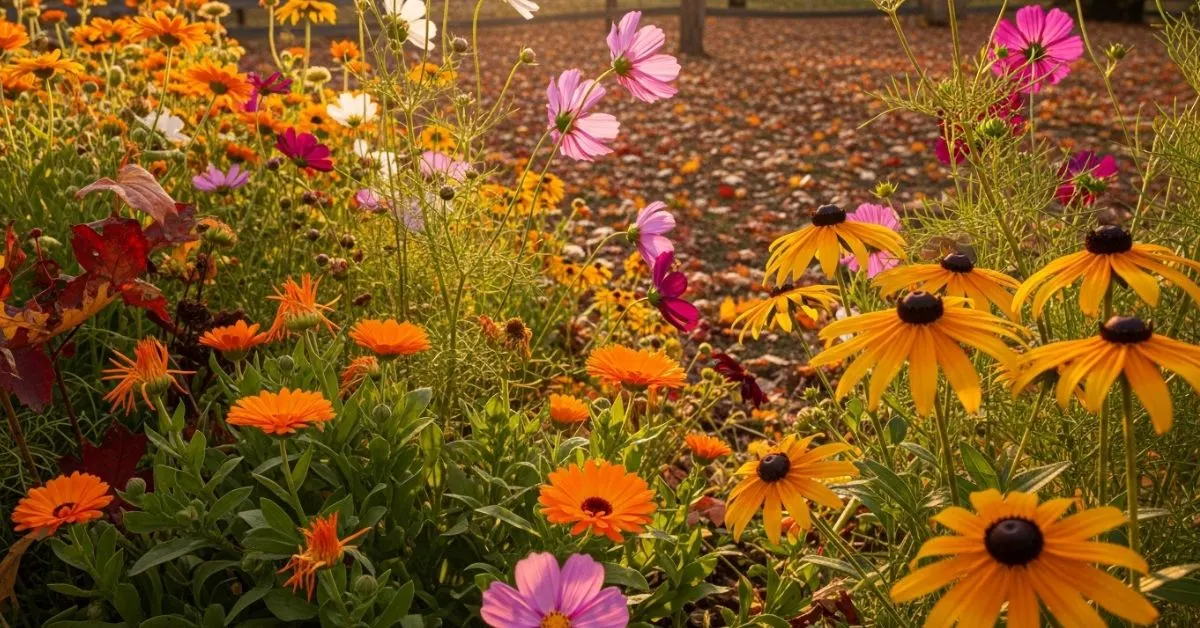
The Self-Seeding Flower That Adds a Pop of Color to Your Fall Garden
If you’ve ever dreamed of a colorful fall garden that comes back year after year without much effort, self-seeding flowers are your secret weapon. These hardy blooms scatter their own seeds at the end of the season, so when spring or summer rolls around, they pop back up on their own. For busy gardeners or anyone who loves a natural, effortless look, self-seeding flowers are a true gift.
In this guide, we’ll cover why these plants are perfect for a fall garden, the best varieties to grow, and tips to manage them so your backyard stays vibrant season after season. Whether you’re new to gardening or an experienced green thumb, you’ll find that self-seeding flowers bring beauty, resilience, and ease to your outdoor space.
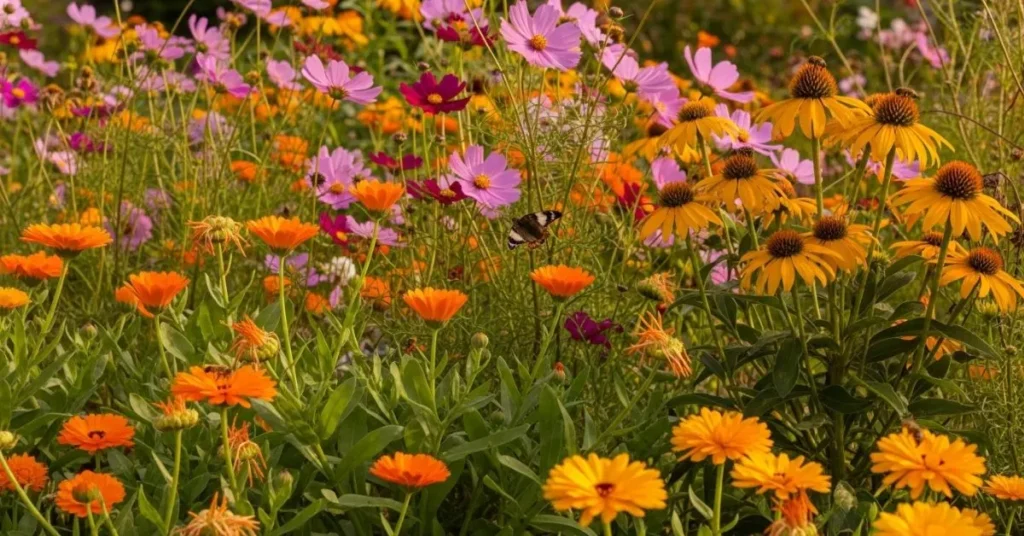
Why Choose Self-Seeding Flowers for Your Fall Garden
When most people think of fall gardens, they imagine pumpkins, mums, and fading summer annuals. But self-seeding flowers deserve just as much attention. Here’s why:
-
Low Maintenance: Once established, they reseed themselves without you lifting a finger.
-
Cost-Effective: Buy seeds once, and enjoy them for years.
-
Natural Beauty: These flowers spread in a relaxed, cottage-garden style that looks effortless and inviting.
-
Pollinator Friendly: Many varieties attract bees and butterflies, even late in the season.
Growing self-seeding flowers is not only a smart choice but also adds sustainability to your garden. Instead of replanting each year, you allow nature to do the work.
Best Self-Seeding Flowers to Brighten Your Fall Garden
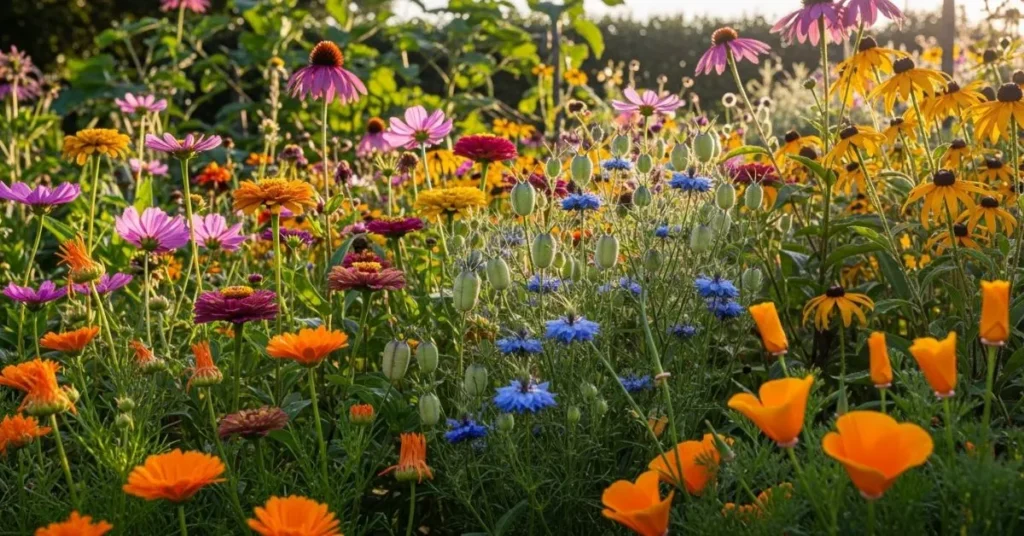
Not all flowers reseed equally well, but a few varieties are famous for returning year after year. Here are some of the best choices if you want both color and reliability.
1. Calendula (Pot Marigold)
Calendula is a cheerful orange and yellow flower that thrives in cool weather. It reseeds easily and often blooms well into fall. Its petals are even edible, making it both pretty and practical.
2. Cosmos
Known for their delicate, daisy-like blooms, cosmos are effortless to grow. Once you plant them, they scatter seeds freely, and by next summer you’ll have a colorful patch with shades of pink, purple, and white.
3. Zinnias
Zinnias bring bold, bright colors that last through the fall. They drop seeds generously, and with a bit of deadheading, you’ll enjoy fresh blooms until frost.
4. Nigella (Love-in-a-Mist)
This whimsical flower produces blue and white blooms surrounded by ferny foliage. The seed pods are decorative and naturally fall to the ground, ensuring new plants the following year.
5. Coneflowers (Echinacea)
Coneflowers are hardy perennials but also self-seed freely. Birds love their seed heads, which scatter new growth while adding fall interest.
6. Black-Eyed Susans
These golden-yellow blooms brighten any fall garden. They are classic self-seeding flowers that spread naturally, filling empty spots beautifully.
7. California Poppies
If you want a splash of orange and gold, California poppies are an excellent choice. They reseed reliably and often create a carpet of color.
How to Grow Self-Seeding Flowers in Your Garden
Planting self-seeding flowers doesn’t take much effort, but a few steps can ensure the best results.
1. Pick the Right Spot
Choose a sunny area with well-drained soil. Most self-seeding flowers love at least 6 hours of direct sunlight.
2. Prepare the Soil
Loosen the top layer and mix in compost. Healthy soil helps the seeds germinate quickly and return strongly year after year.
Soil prep is just as important as we explain in Gardening Tips for Beginners.
3. Direct Sow for Best Results
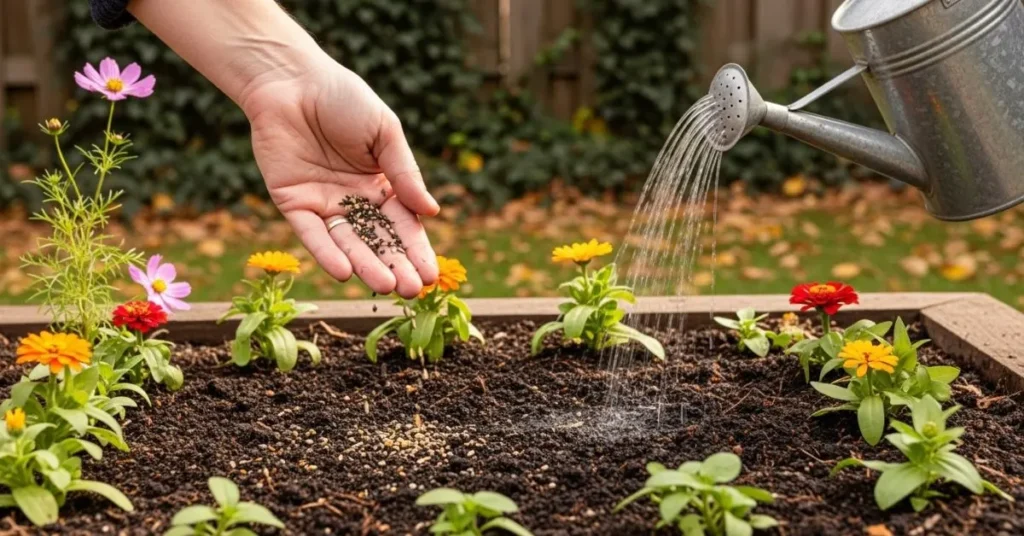
Unlike delicate plants that need indoor starts, most self-seeding flowers do best when sown directly in the ground. Scatter seeds, water gently, and let nature do the rest.
4. Water Carefully
Keep soil moist during germination but avoid overwatering. Once the plants are established, many self-seeding flowers tolerate dry spells.
5. Let Seeds Drop Naturally
At the end of the season, resist the urge to deadhead every flower. Allow some seed heads to mature and fall so that the cycle continues next year.
Common Mistakes to Avoid
Even though self-seeding flowers are easy, beginners sometimes make mistakes:
-
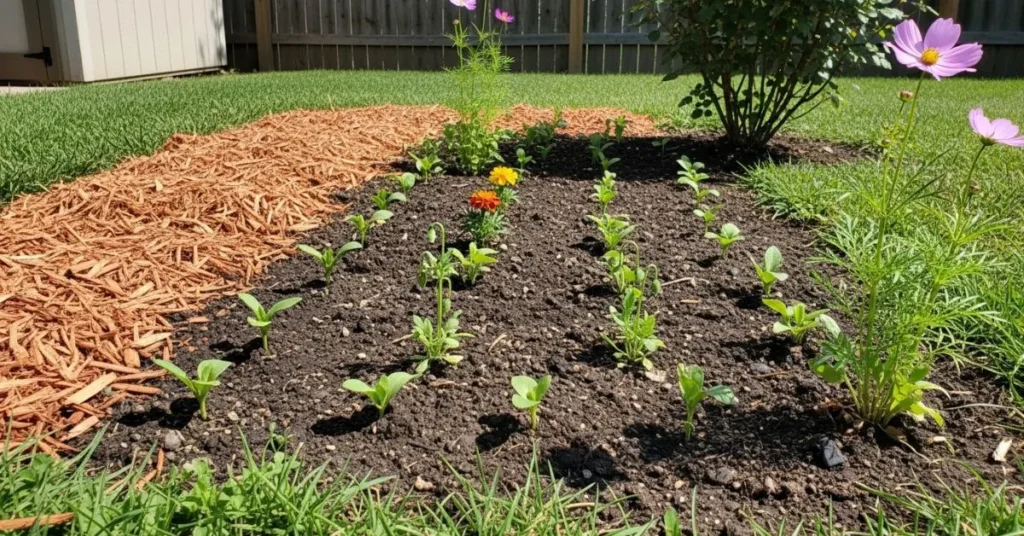
Over-mulching: Thick mulch can block seeds from reaching the soil.
-
Excess Deadheading: Cutting too many flowers prevents reseeding.
-
Pulling Seedlings: In spring, some new seedlings may look like weeds. Take care before removing them.
Extra Tips for a Colorful Fall Garden
-
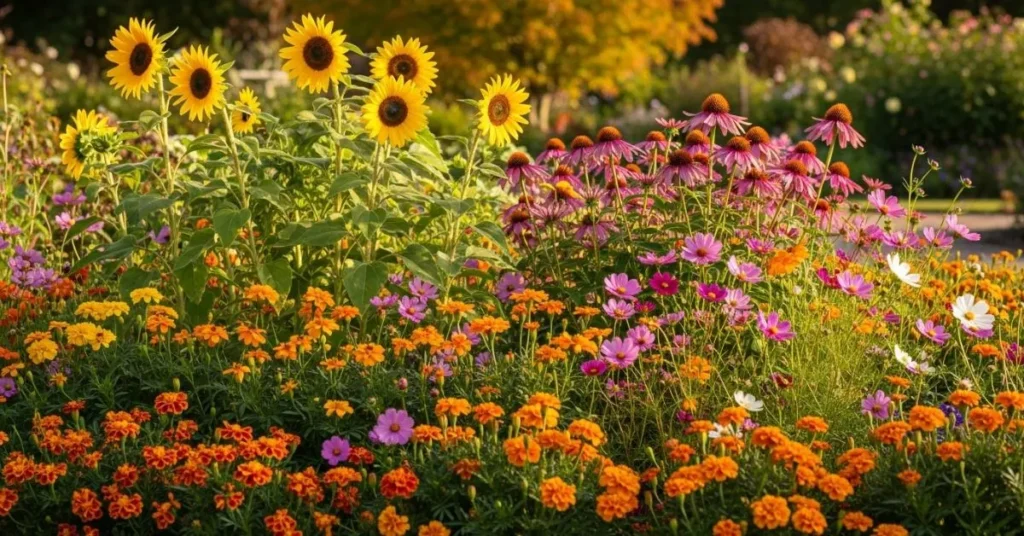
Mix tall varieties like sunflowers or coneflowers with shorter self-seeders for a layered look.
-
Combine reseeding annuals with perennials for long-lasting color.
-
Keep a small journal of what reseeds successfully in your backyard. Over time, your garden will develop a natural rhythm.
For creative planting inspiration, also explore our Vegetable Gardening
Conclusion
Planting self-seeding flowers is one of the easiest ways to enjoy a vibrant fall garden without replanting every year. From cheerful calendulas to bold zinnias, these blooms return on their own, saving time and money while adding beauty to your backyard.
The key is to choose varieties that suit your climate, prepare the soil, and allow seeds to fall naturally at the end of the season. With a little patience, you’ll have a colorful, ever-renewing garden that welcomes pollinators and delights the eye.
So this fall, try adding self-seeding flowers to your backyard. They’ll reward you with effortless beauty year after year.
FAQs self-seeding flowers
[sp_easyaccordion id=”699″]