
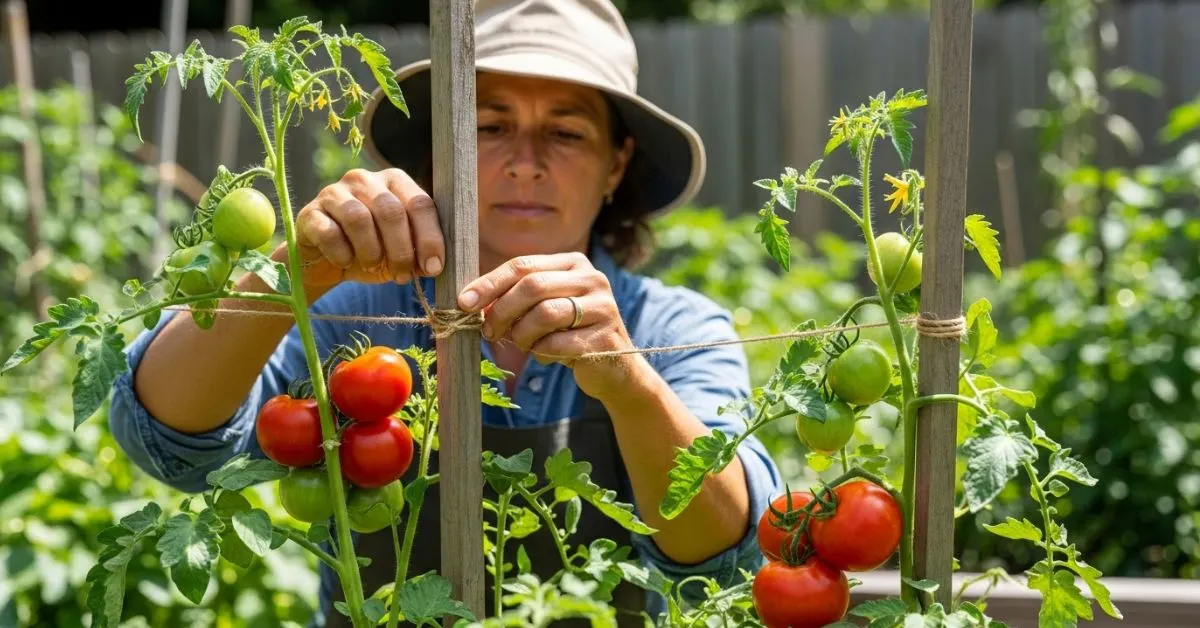
How to Train Tomato Plants for Bigger Harvests
Tomatoes are one of the most rewarding crops for home gardeners. Whether you’re growing them in containers, raised beds, or a backyard plot, the difference between a small yield and a heavy harvest often comes down to one thing, training. Learning how to train tomato plants properly helps direct the plant’s energy toward producing more fruit instead of excess foliage.
In this guide, you’ll learn every essential step, from pruning and staking to choosing the right support systems, so your tomato plants grow stronger, healthier, and far more productive.
Why Training Tomato Plants Matters
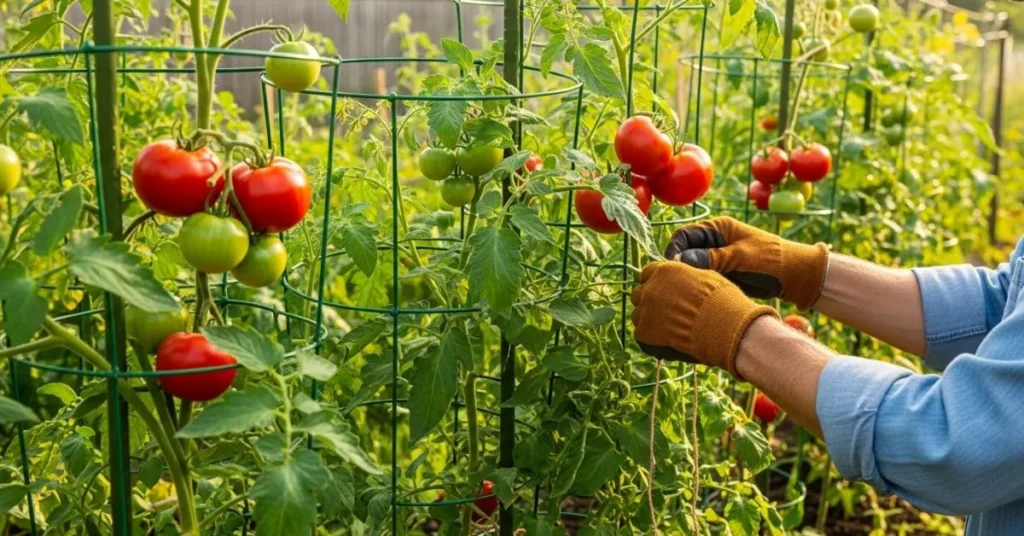
Training your tomato plants might sound like extra work, but it’s one of the most effective ways to get bigger harvests. When left to sprawl on the ground, tomato plants waste energy growing wild stems and are more likely to suffer from pests and diseases.
By guiding them upward using stakes, cages, or trellises, you:
-
Improve air circulation
-
Expose leaves to more sunlight
-
Prevent rot and soil-borne diseases
-
Make harvesting easier
-
Encourage larger, healthier fruit
Understanding the Types of Tomato Plants
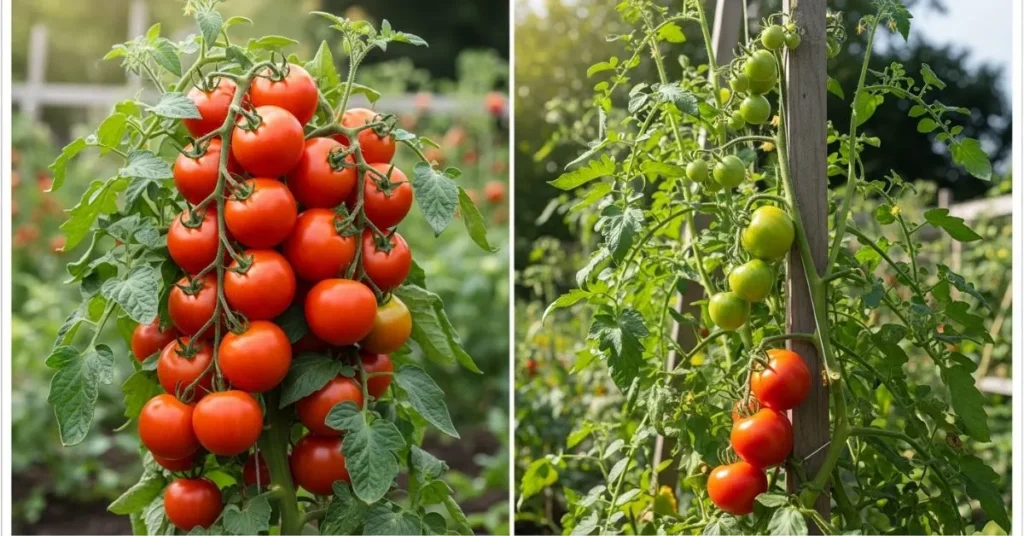
Before you start training, you need to know which type of tomato you’re growing. Not all plants grow the same way, and the training method depends heavily on the variety.
1. Determinate Tomatoes
These are also called bush tomatoes. They grow to a fixed height (usually around 3–4 feet) and produce fruit all at once. They don’t need heavy pruning but still benefit from light support.
2. Indeterminate Tomatoes
These are vining tomatoes that keep growing and producing until frost. They need strong supports, regular pruning, and careful training to stay productive.
If you’re aiming for long-term harvests, indeterminate varieties are ideal because training helps them reach their full potential.
Choosing the Right Support System
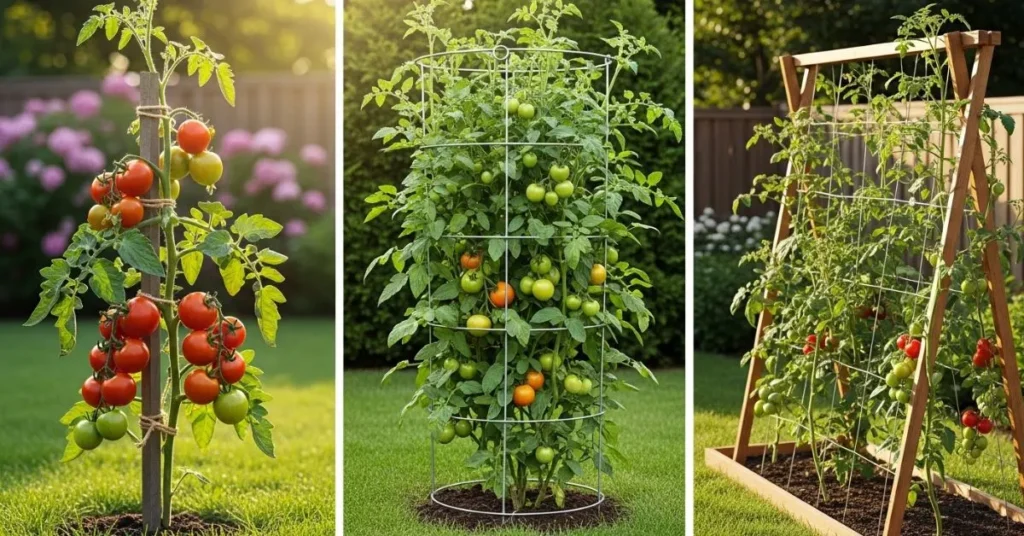
The next step in learning how to train tomato plants is picking the right support system. Different gardeners prefer different styles depending on space, variety, and growing setup.
1. Stakes
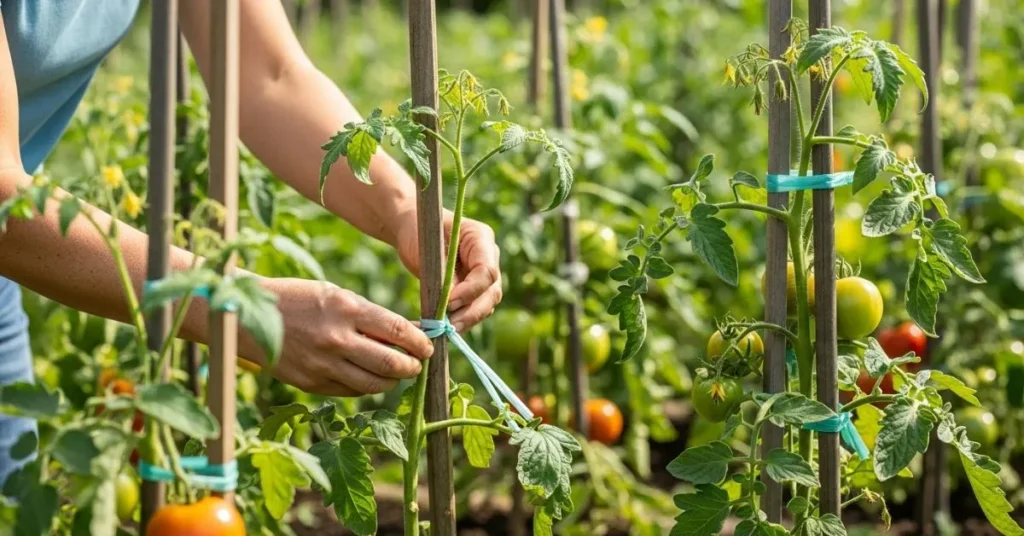
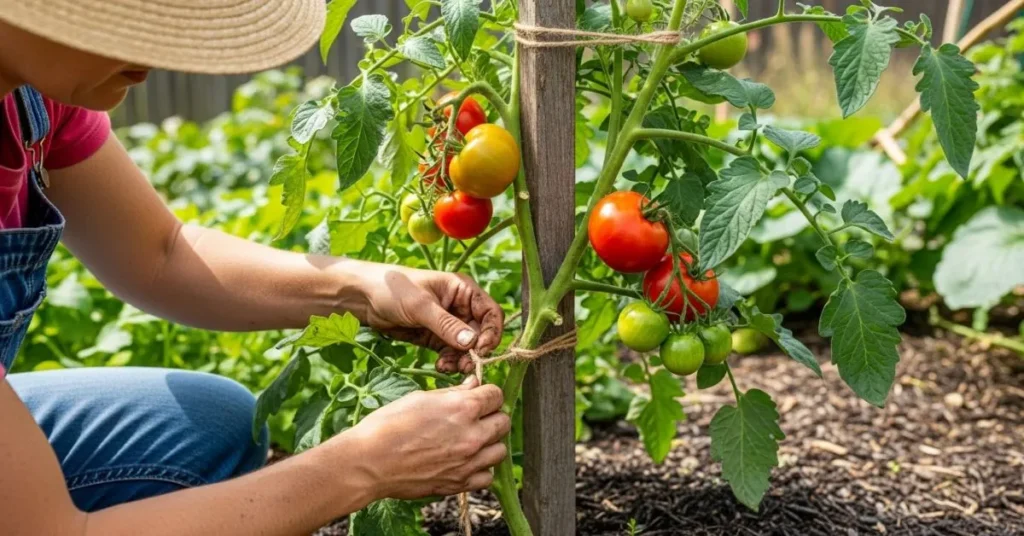
Stakes are the most traditional way to train tomato plants. You can use wooden, bamboo, or metal stakes about 6–8 feet tall. Tie the main stem loosely to the stake as the plant grows upward.
Pros:
-
Cheap and easy to set up
-
Keeps plants upright
-
Allows good airflow
Cons:
-
Needs regular tying
-
Not suitable for large, bushy plants
2. Tomato Cages
Tomato cages are perfect for beginners. They’re easy to use — just place them around your plant when it’s still small. The plant naturally grows into the cage and supports itself.
Pros:
-
Minimal maintenance
-
Great for small gardens or containers
Cons:
-
Limited support for tall indeterminate plants
3. Trellises
A trellis system is ideal for gardeners with multiple tomato plants. You can use wooden frames, wire mesh, or string systems to create a sturdy vertical support.
Pros:
-
Supports multiple plants
-
Easy to harvest
-
Great air circulation
Cons:
-
Requires initial setup time
For more support ideas, check out your article on Green Lawn Care Tips.
Step-by-Step Guide: How to Train Tomato Plants
Training tomatoes isn’t complicated, it just takes consistency. Follow these steps to keep your plants tidy and productive throughout the season.
Step 1: Start Early
Begin training when the plant is about 10–12 inches tall. Waiting too long can make it harder to manage stems without breaking them.
Step 2: Choose the Strongest Stem
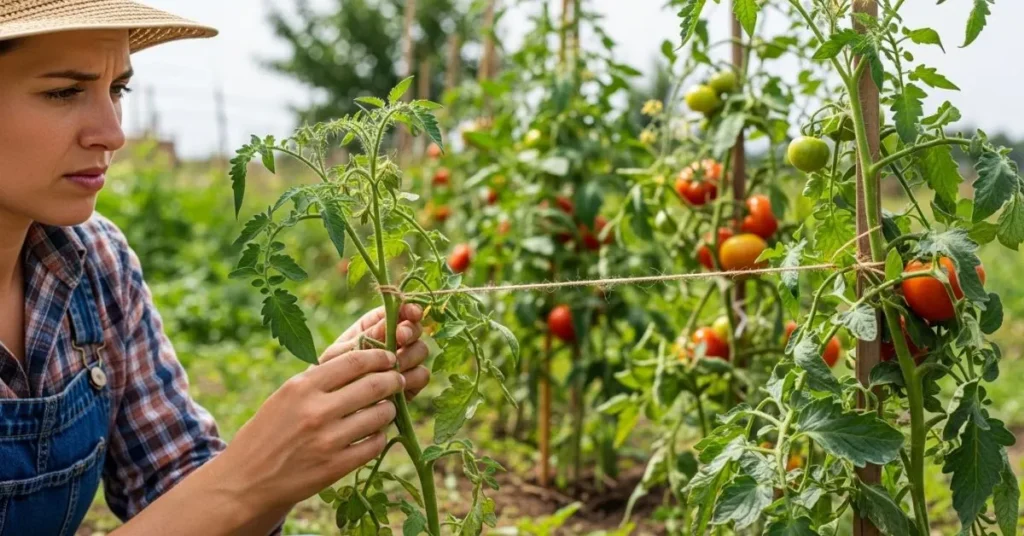
Select one or two main stems (called leaders) and remove the rest of the weak side shoots. This ensures energy goes toward growing fruit, not unnecessary leaves.
Step 3: Tie Regularly
Use soft garden ties, string, or fabric strips to gently secure the main stem to your support. Avoid tying too tightly, the stem needs room to expand as it grows.
Step 4: Prune Suckers
Suckers are small shoots that appear in the leaf axils (where the leaf meets the stem). Pinch them off when they’re 2–3 inches long. Regular pruning encourages better airflow and more fruit.
Step 5: Remove Lower Leaves
As plants grow taller, remove lower leaves that touch the soil. This reduces the risk of fungal infections.
You can also visit Indoor Plant Care for general plant maintenance tips.
Common Tomato Training Mistakes to Avoid
Even experienced gardeners make mistakes. Avoid these common errors to keep your plants strong and your harvests big.
Over-Pruning
Removing too many leaves reduces photosynthesis, slowing down fruit production. Keep enough leaves for energy generation.
Using the Wrong Materials
Rough twine or tight ties can cut into stems. Always use soft materials.
Ignoring Support Early
If you don’t install supports at planting time, you risk damaging roots later when adding stakes or cages.
Feeding and Watering Your Trained Tomato Plants
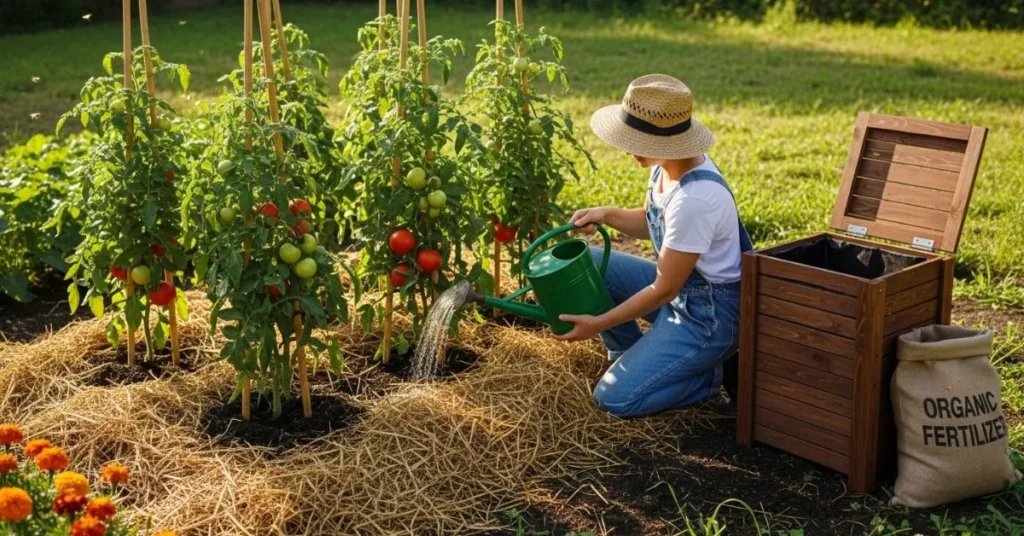
Training helps shape your plants, but nutrients and water are what drive yield. To truly get a bigger tomato harvest, follow these feeding and watering guidelines:
-
Water deeply once or twice a week instead of frequent shallow watering.
-
Use mulch to retain soil moisture and reduce weeds.
-
Apply organic compost or tomato-specific fertilizer every 2–3 weeks.
-
Avoid watering the leaves, focus on the base to prevent disease.
The Role of Sunlight and Airflow
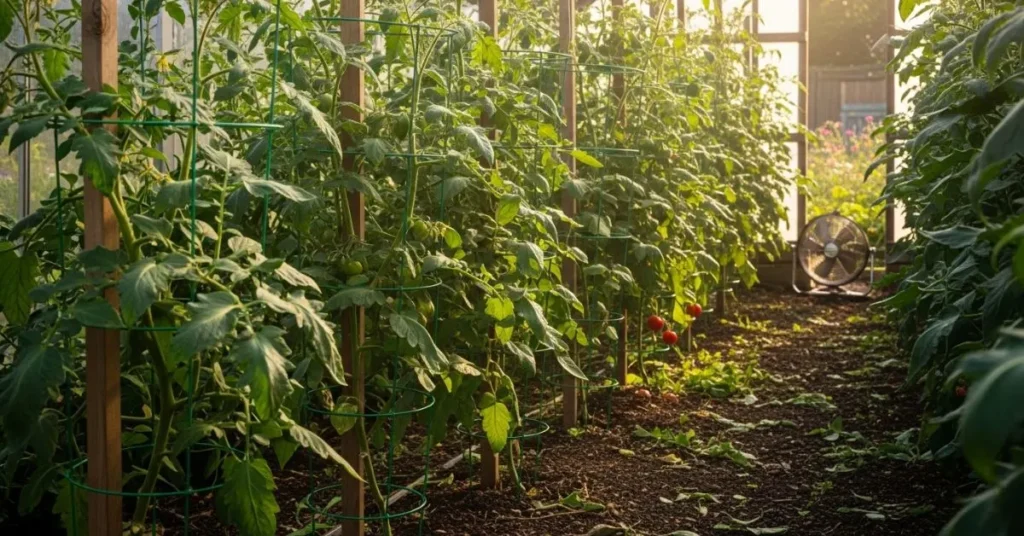
Tomatoes thrive on sunlight, ideally 6–8 hours per day. Proper training ensures every leaf gets light exposure. It also keeps air moving between stems, preventing mold and blight.
If you’re growing tomatoes indoors or in a greenhouse, use grow lights and a small fan to maintain ventilation.
When and How to Harvest
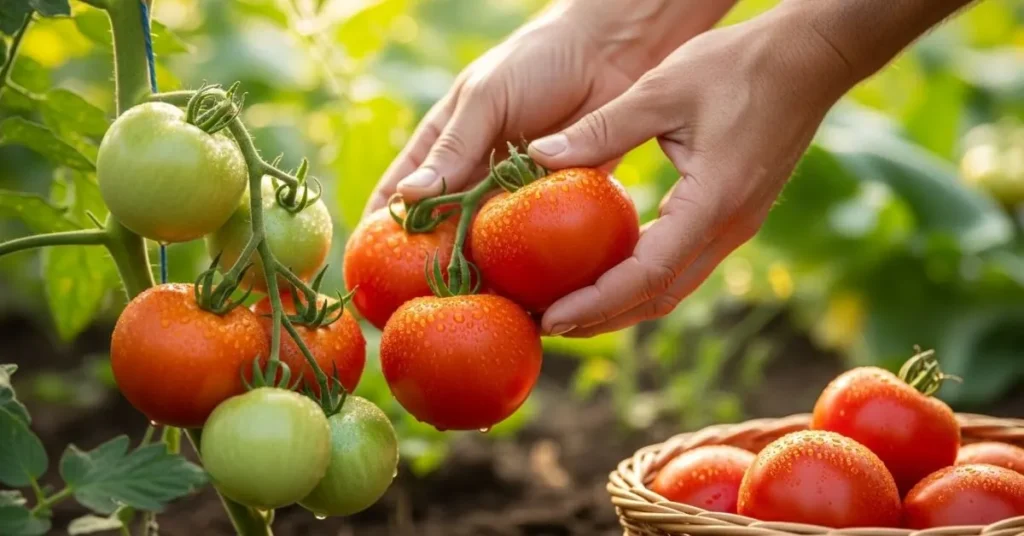
Your plants will reward your care with clusters of vibrant tomatoes. For the best results:
-
Harvest when fruits are firm and fully colored.
-
Don’t wait too long or they’ll split.
-
Pick regularly to encourage continuous fruiting.
Harvesting at the right time also makes room for new flowers and fruit to develop.
Companion Plants for Healthier Tomatoes
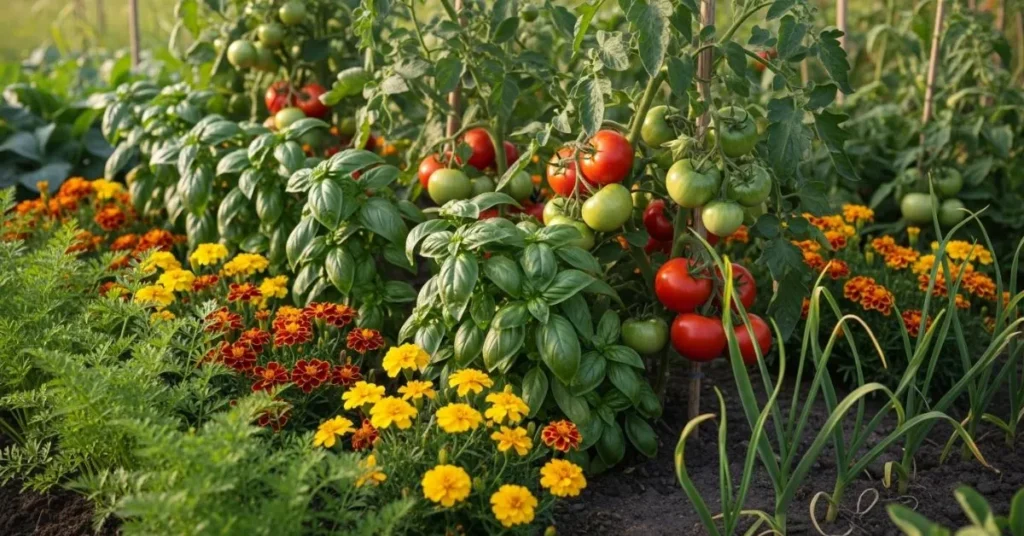
Certain plants naturally repel pests and improve tomato growth. You can grow them nearby for healthier crops.
Best Companions
-
Basil – enhances flavor and repels aphids.
-
Marigold – deters nematodes and whiteflies.
-
Garlic – wards off fungal diseases.
-
Carrots – help loosen soil for better drainage.
Learn about garlic growing in Growing Garlic in Fall.
Troubleshooting: Fixing Common Problems
Even well-trained tomato plants can face challenges. Here’s how to spot and solve them early.
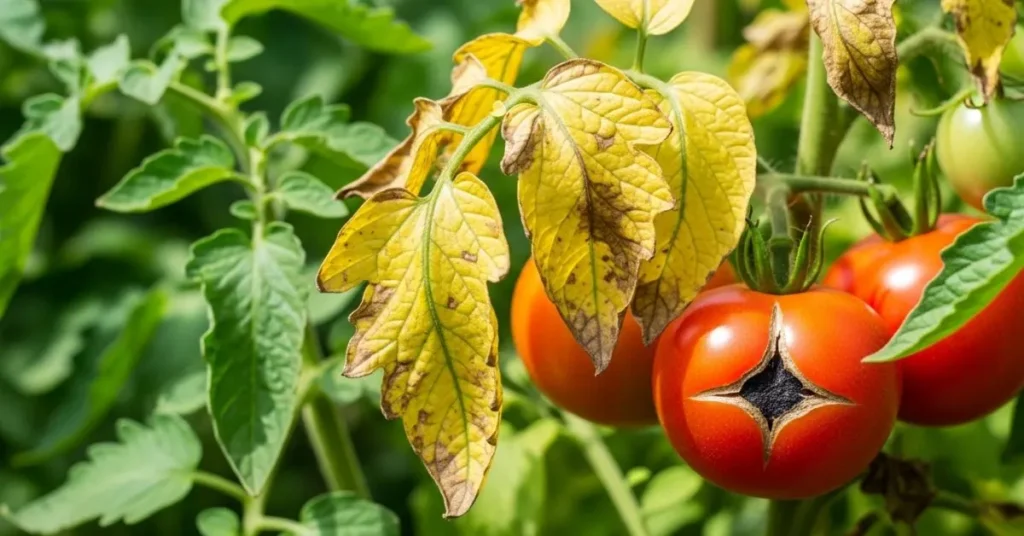
1. Yellow Leaves
Usually caused by overwatering or nutrient deficiency. Check drainage and use a balanced fertilizer.
2. Cracked Fruit
Inconsistent watering can cause the fruit to swell and crack. Keep moisture levels steady.
3. Blossom End Rot
This is a calcium deficiency. Use lime or crushed eggshells around the base.
Maintaining Trained Tomato Plants
Once your tomatoes are trained and growing strong, a little maintenance keeps them productive all season.
-
Retie stems as they grow taller.
-
Check supports weekly for stability.
-
Remove dead or diseased leaves immediately.
-
Keep the soil mulched and moist.
This consistent care ensures the plant keeps channeling energy toward producing fruit instead of excess foliage.
Final Thoughts
Learning how to train tomato plants is one of the smartest steps any gardener can take. It keeps plants organized, reduces disease, and produces bigger, juicier tomatoes. With the right support system, regular pruning, and proper feeding, your tomato garden can deliver an abundant harvest all season long.
Remember: tomatoes respond well to consistent care. A few minutes each week spent pruning, tying, and checking for pests can make a massive difference when harvest time arrives.
If you’re ready to take your gardening to the next level, explore related guides on your site such as:
These resources will help you keep every corner of your garden thriving, indoors and out.
FAQs How to Train Tomato Plants
[sp_easyaccordion id=”1008″]