
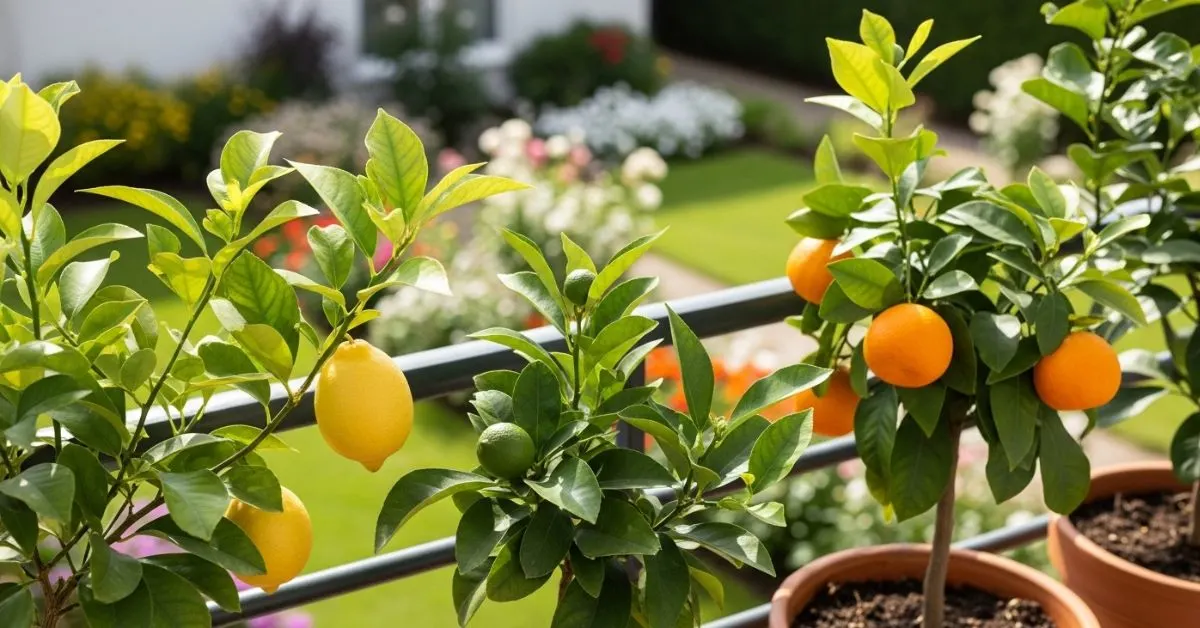
How to Grow Citrus Trees in Containers at Home
Citrus trees like lemons, limes, oranges, and kumquats are popular for their fragrant blossoms and fresh, tangy fruits. Many think these trees require a large garden, but how to grow citrus trees in containers at home makes it easy for anyone, even in apartments or homes with limited yard space. Container gardening allows you to enjoy juicy fruits right outside your door while controlling soil quality and protecting plants from harsh weather.
Choosing the Right Citrus Variety for Containers
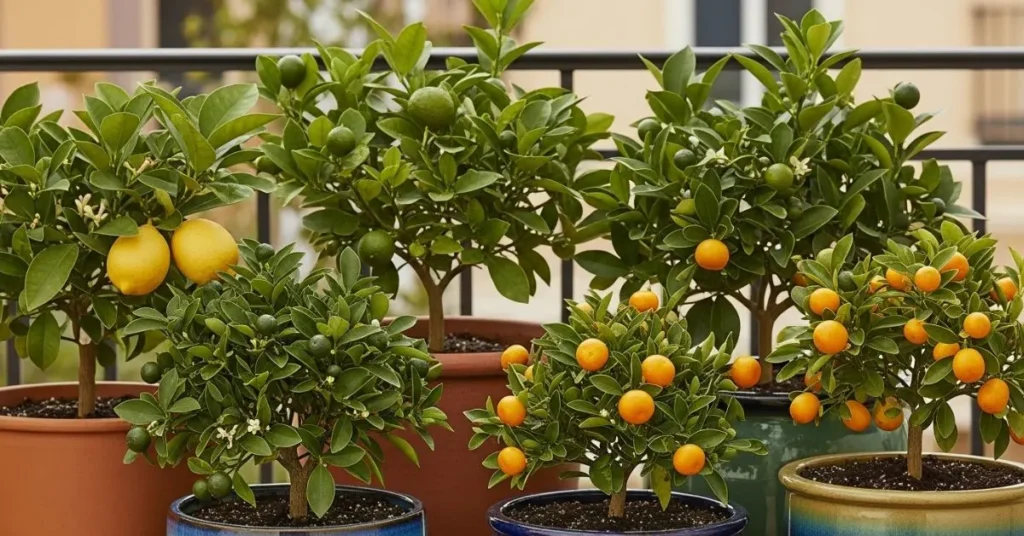
Not every citrus tree thrives in a pot. The best options are dwarf or semi-dwarf varieties, which stay compact while producing full-sized fruits. Popular choices include Meyer lemon, Key lime, Calamondin orange, and kumquat. Beginners often prefer Meyer lemon because it’s hardy, flavorful, and grows well in containers.
Best Containers and Soil Mix for Citrus Trees
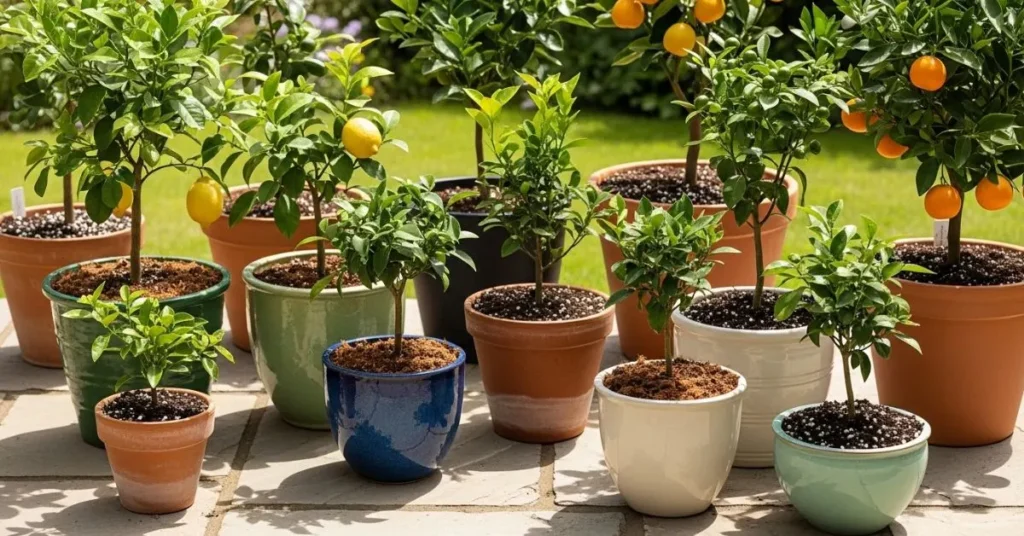
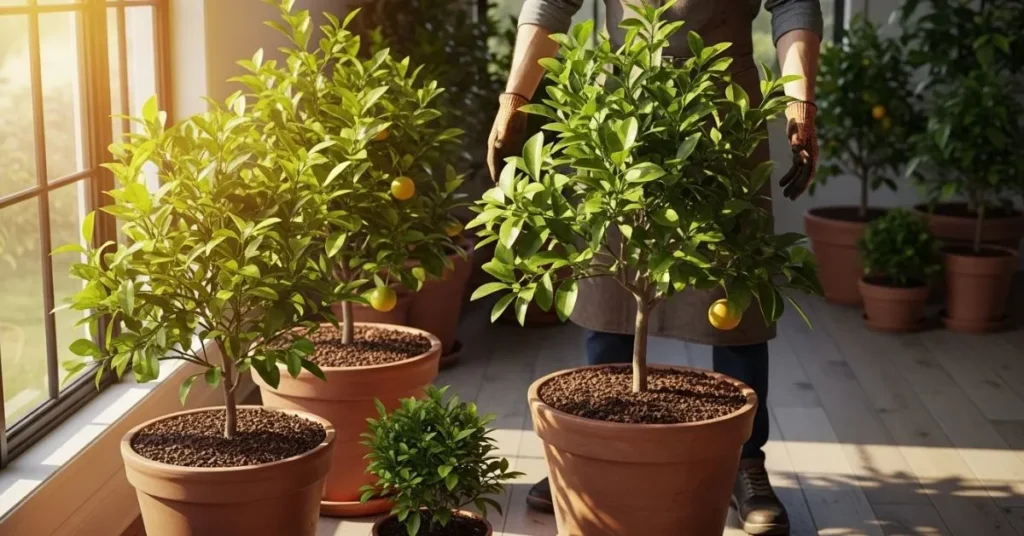
Container size and material are crucial for healthy growth. Young trees do well in 15–20 inch pots made of terracotta, ceramic, or sturdy plastic with drainage holes. Avoid garden soil; instead, use a lightweight, well-draining potting mix enriched with perlite, coco coir, and compost.
Learn soil prep for citrus trees in pots from Seeds and Planting.
Planting Citrus Trees in Pots Step by Step
-
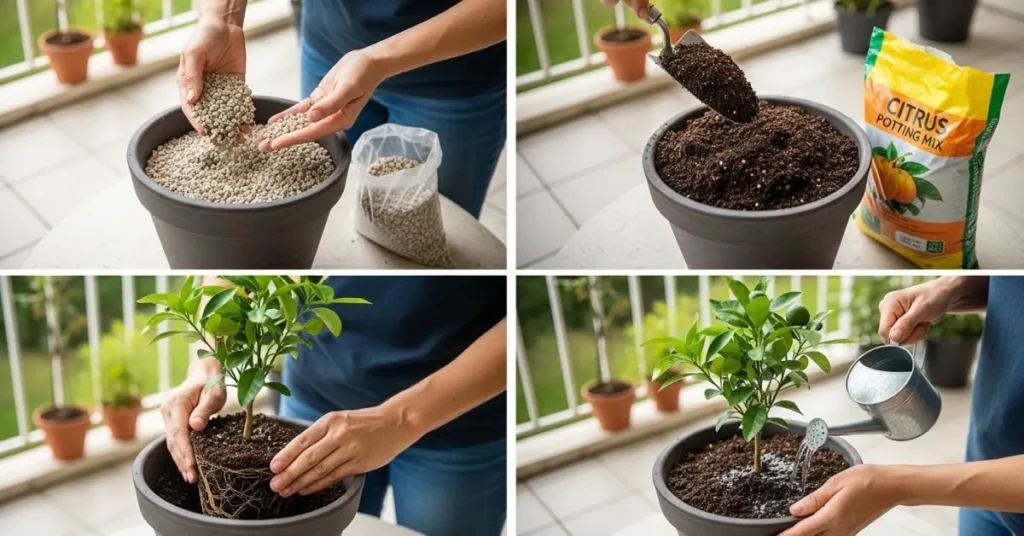
Choose a container with drainage holes.
-
Add a gravel layer at the bottom.
-
Fill halfway with soil mix.
-
Place the tree, keeping the root crown above soil.
-
Fill remaining soil, press gently, and water thoroughly.
The first watering helps settle roots. Keep the tree in bright shade for a few days before moving it to full sun.
Sunlight and Temperature Needs
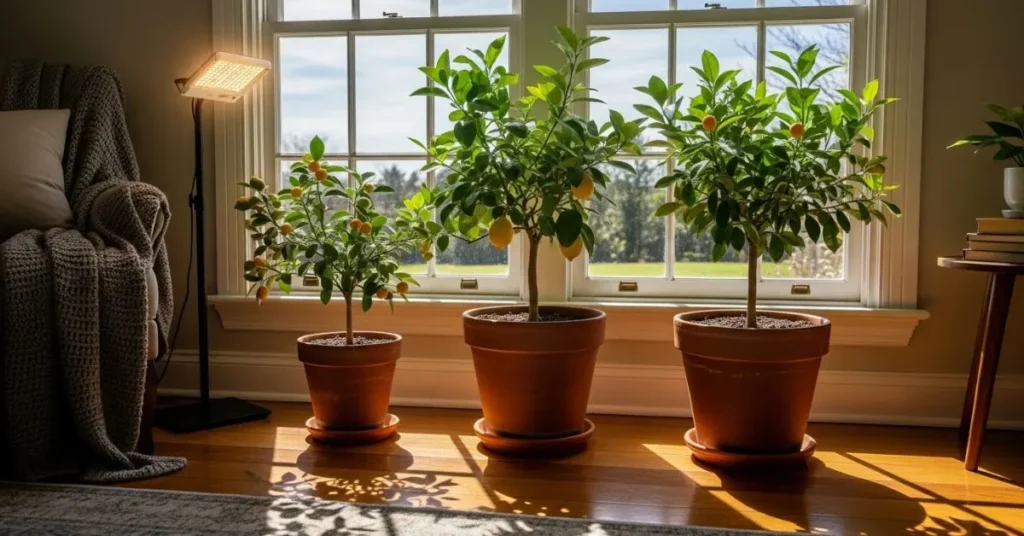
Citrus trees need 6–8 hours of sunlight daily. For indoor setups, place the pot near south-facing windows or use a grow light. Ideal temperature ranges from 55–85°F. Cold climates require bringing pots indoors in winter.
Watering and Fertilizing Citrus Trees in Containers
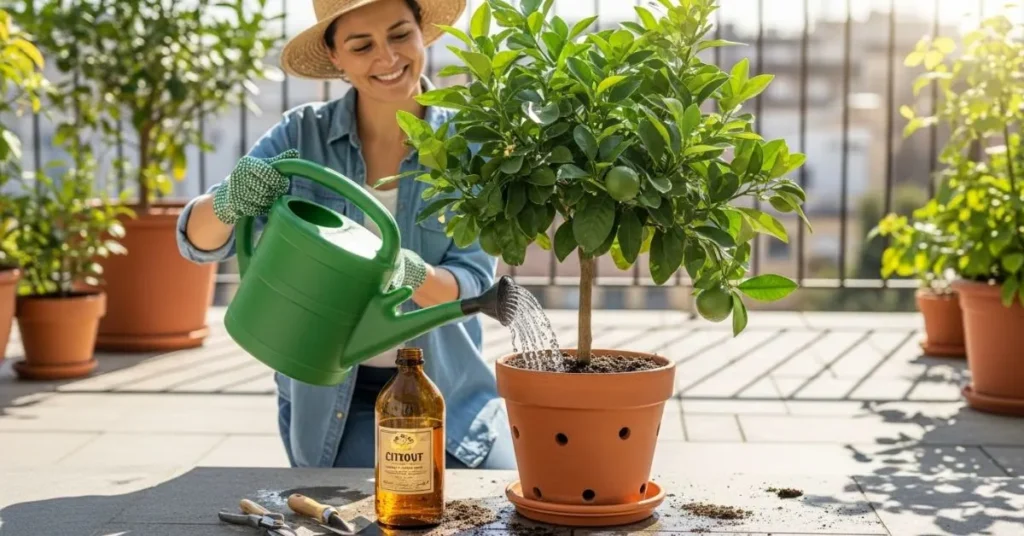
Overwatering is the most common mistake with container citrus. Always check the top 2 inches of soil before watering. Water deeply until excess drains out. Summer may require more frequent watering; winter requires less.
Fertilizing is essential since nutrients leach out from frequent watering. Use slow-release citrus fertilizer rich in nitrogen, magnesium, and iron every 4–6 weeks during the growing season. Organic options like fish emulsion or compost tea work well.
Learn about organic fertilizers from How to Make Compost at Home.
Pruning and Training Citrus Trees in Containers
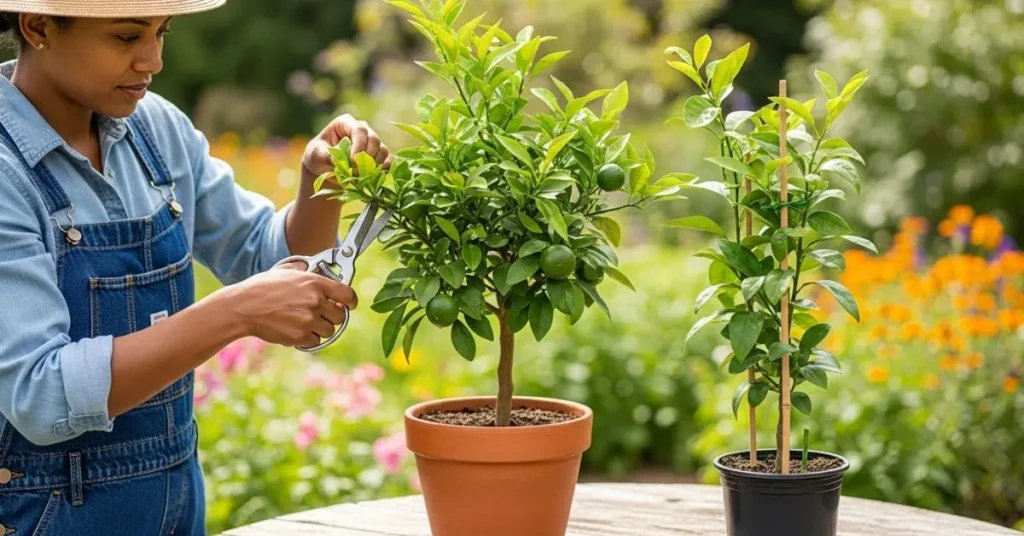
Pruning maintains compact growth and promotes healthy branches. Remove dead or weak limbs in early spring. Trim tops if trees become too tall. For indoor citrus, pruning improves airflow, reducing pest problems.
Training can be single trunk or bushy form, depending on preference. Support young trees with stakes as needed.
Common Problems and Pest Control
Container citrus may face:
-
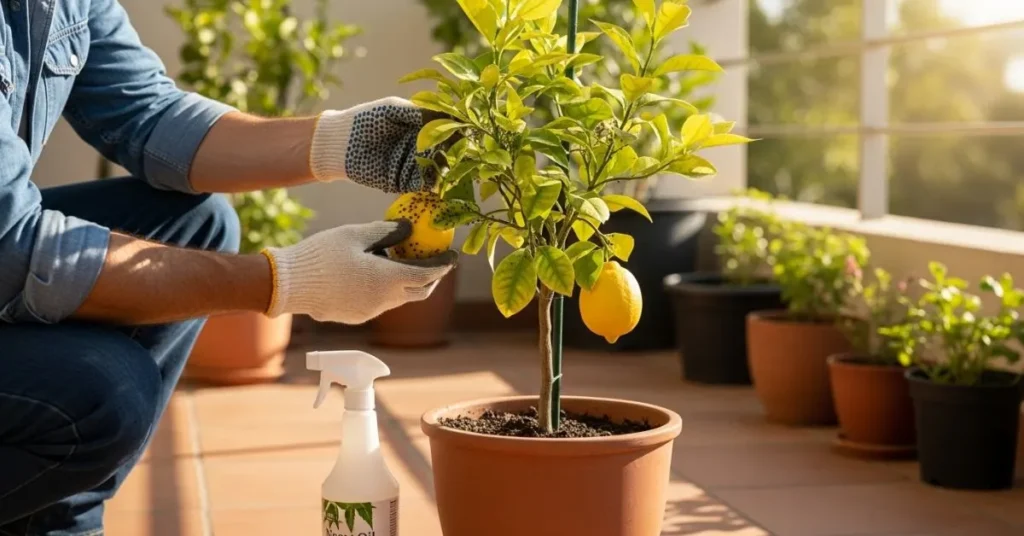
Yellow leaves: Often caused by overwatering or nutrient deficiency.
-
Root rot: Due to waterlogged soil; ensure good drainage.
-
Poor fruiting: Often lack of sunlight or fertilization.
-
Pests: Aphids, spider mites, and scale insects can attack citrus. Control naturally with neem oil, insecticidal soap, or washing leaves.
Harvesting Citrus Fruits at Home
Citrus trees may take 2–3 years to produce fruits. Harvest when fruits are fully colored and slightly heavy. Avoid picking early; citrus does not ripen off the tree. Twist gently or use pruning shears.
Tips for Year-Round Healthy Citrus Growth
-
Move plants indoors before frost in colder climates.
-
Repot every 2–3 years with fresh soil for nutrients.
-
Mulch top soil to retain moisture, keeping mulch away from the trunk.
-
Rotate pots every few weeks for even sunlight exposure.
Conclusion
With how to grow citrus trees in containers at home, anyone can enjoy fresh lemons, limes, oranges, or kumquats even in small spaces. Focus on choosing dwarf varieties, proper soil, sunlight, watering, pruning, and regular care. Start with one pot today and enjoy homegrown citrus in a few years.
Explore more at Seeds and Planting
FAQs How to Grow Citrus Trees
[sp_easyaccordion id=”902″]