
How to Grow Perennial Flowers: A Complete Guide for Every Gardener
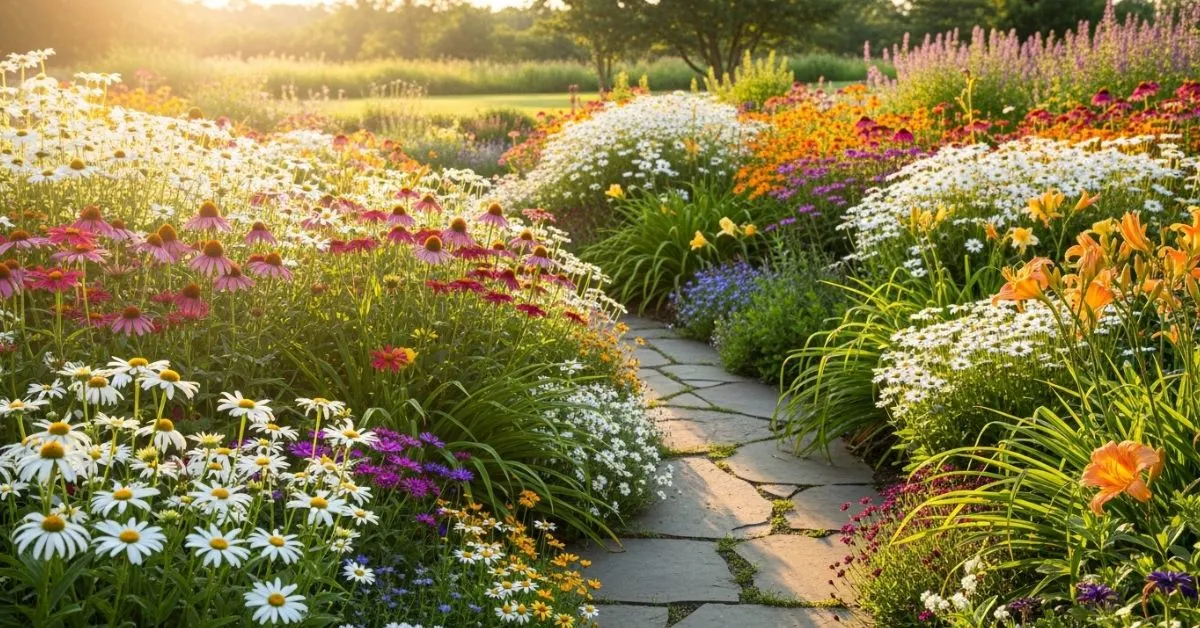
Every garden tells a story, and the flowers you choose become the characters. While annuals give you quick color, nothing compares to the reliability and beauty of perennial flowers. They return year after year, filling bare spots, adding texture, and rewarding you with blooms that last for seasons. If you’ve ever wondered how to grow perennial flowers successfully, the good news is you don’t need to be an expert. With the right planning, soil preparation, and plant choices, anyone can create a thriving, low-maintenance garden that looks fresh every spring.
In this guide, we’ll explore everything you need to know, from choosing the best perennial flowers for beginners to planting tips, seasonal care, and design ideas. Whether you’re working on a cottage-style landscape, a modern front yard, or simply want to fill empty garden patches, perennials will become your best garden investment.
👉 Before we dive in, don’t forget to explore our Home Page for more gardening inspiration and seasonal tips.
What Are Perennial Flowers?
Perennials are plants that live for more than two years, unlike annuals that complete their life cycle in a single season. Once established, they bloom each year, often getting stronger with time. Some perennials stay evergreen, while others die back in winter and return in spring.
Gardeners love them because they save money and effort. Instead of replanting every season, you get reliable growth. Plus, with the right mix of species, you can ensure something is blooming almost all year.
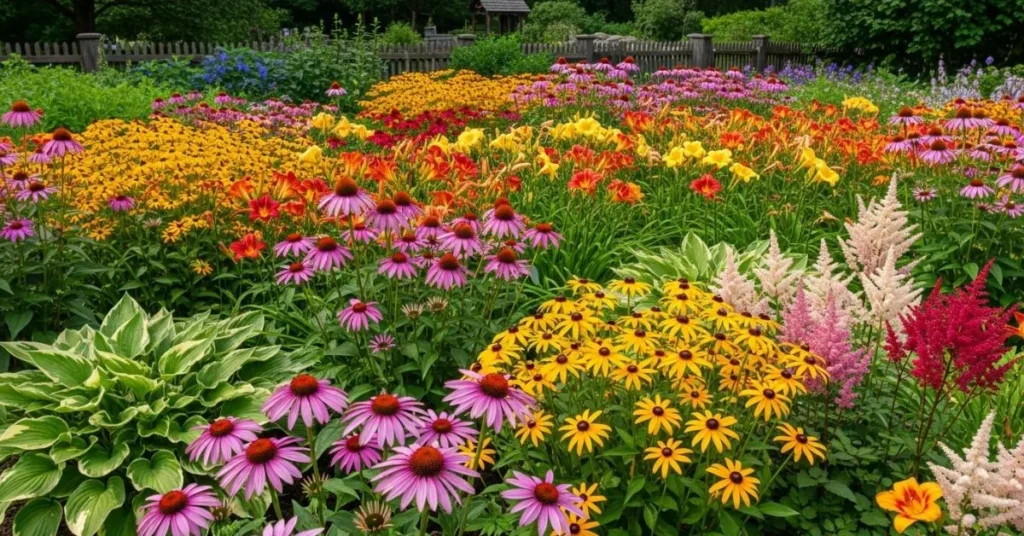
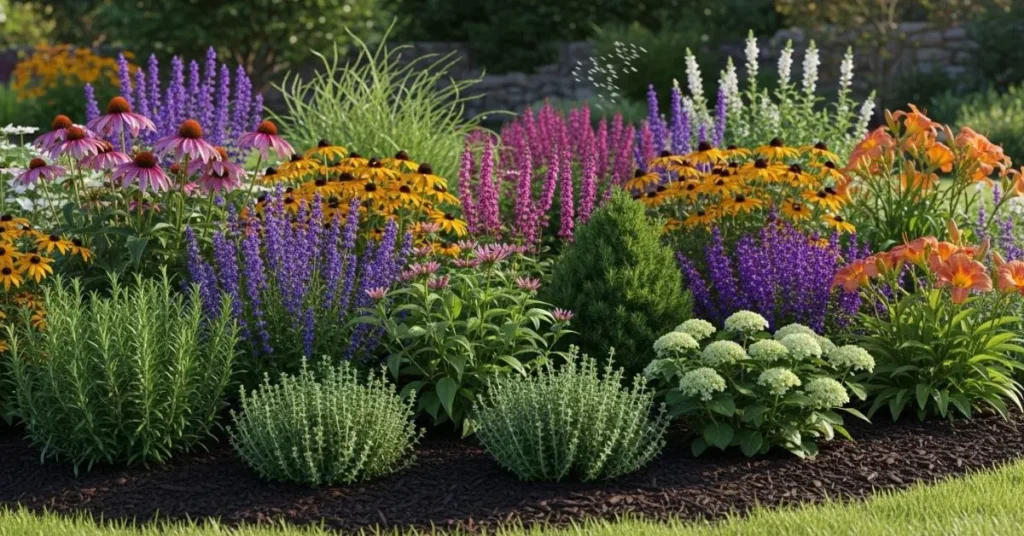
Popular perennial flowers that bloom all summer include coneflowers, black-eyed Susans, and daylilies. For shady areas, hostas and astilbes thrive beautifully.
Why Choose Perennial Flowers for Your Garden
Adding perennials to your garden is more than a design choice, it’s a long-term investment. Here’s why:
-
Low Maintenance: Once established, perennials require less care than annuals.
-
Cost-Effective: Buy once, enjoy for years.
-
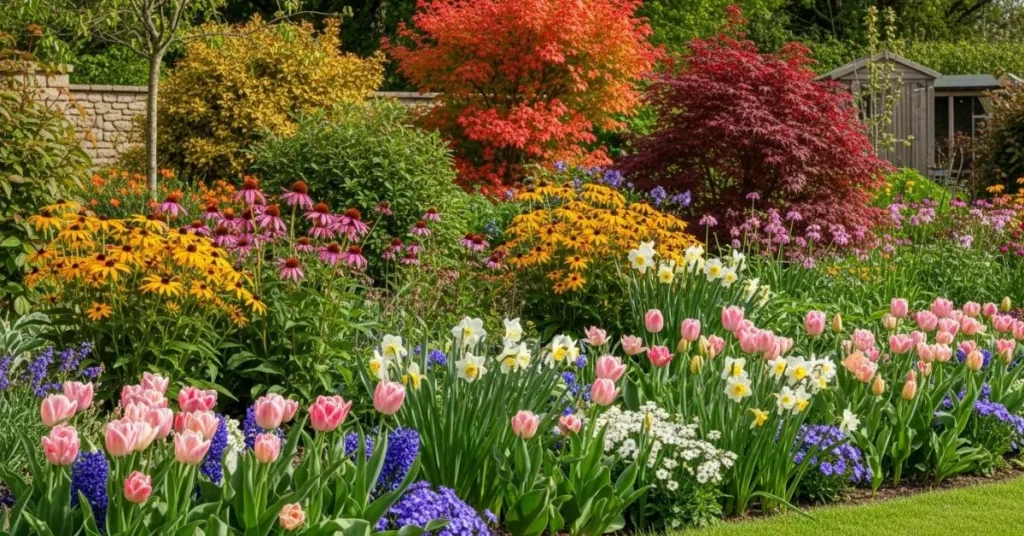
Seasonal Variety: With smart planning, you can enjoy spring bulbs, summer color, and autumn shrubs.
-
Soil Benefits: Their root systems improve soil structure over time.
For new gardeners, perennials also offer a confidence boost. They are forgiving plants that adapt easily and often outlive mistakes. If you’re just starting, check our guide on Seeds and Planting for beginner-friendly options.
Best Perennial Flowers for Beginners
If you’re new to gardening, start simple. Choose hardy, easy-to-grow perennials that require little fuss but give maximum reward.
-
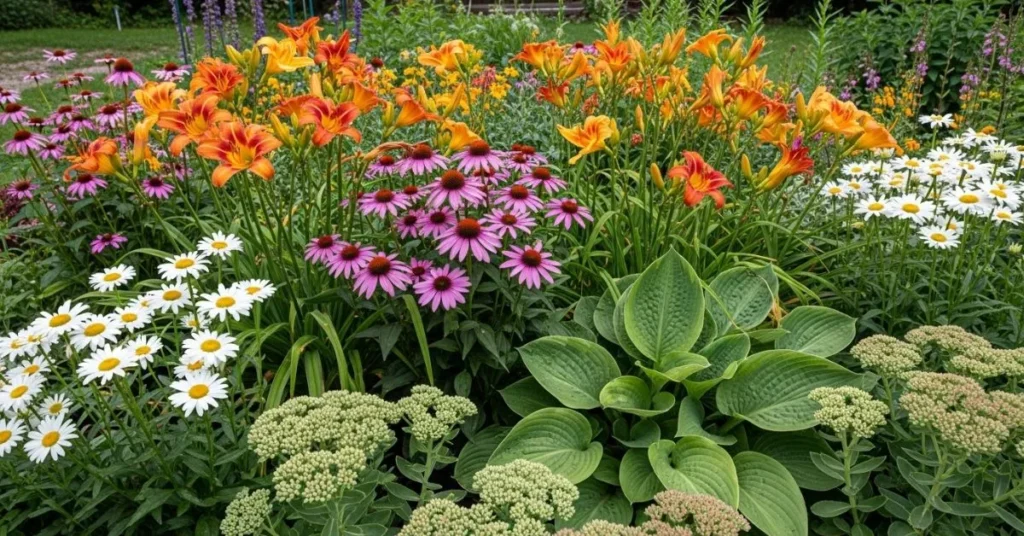
Daylilies: Known as the “perfect perennial,” they thrive in almost any soil.
-
Coneflowers: Drought-resistant and pollinator-friendly.
-
Hostas: Perfect for shady corners.
-
Shasta Daisies: Bright white blooms that return stronger each summer.
-
Sedum: A succulent perennial that loves sunlight and neglect.
👉 Pair these with tips from our Gardening Tips for Beginners to get the perfect start.
How to Plant Perennial Flowers the Right Way
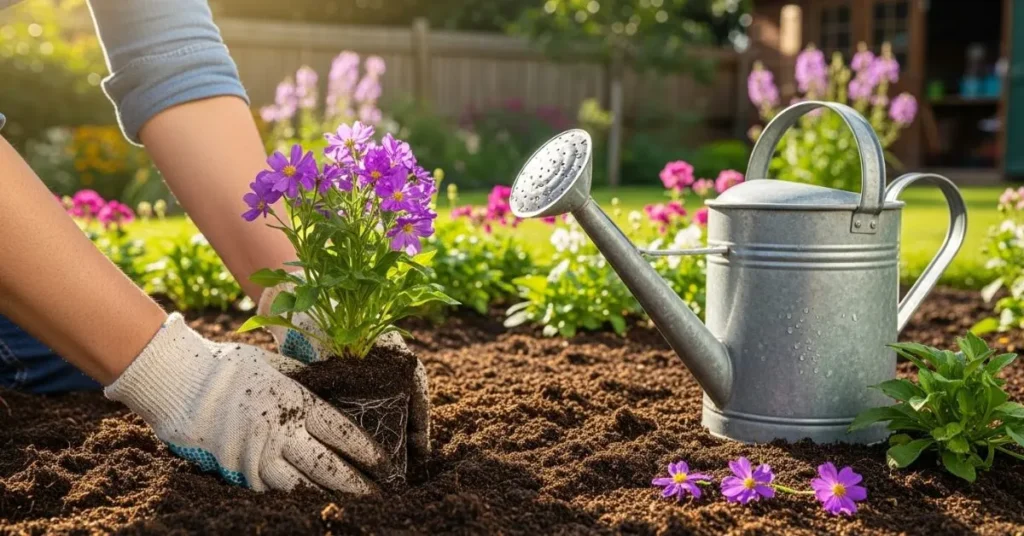
Planting perennials isn’t difficult, but timing and technique matter.
-
Choose the Right Spot: Check sunlight, shade, and soil type.
-
Prepare the Soil: Loosen 12–15 inches deep, add compost for nutrients.
-
Plant at Correct Depth: Roots should be covered but crowns exposed.
-
Water Well: Especially in the first few weeks.
If you want to grow edibles alongside your flowers, container gardening is a great option. Learn more in our guide on Grow Vegetables in Pots.
Designing Your Garden with Perennials
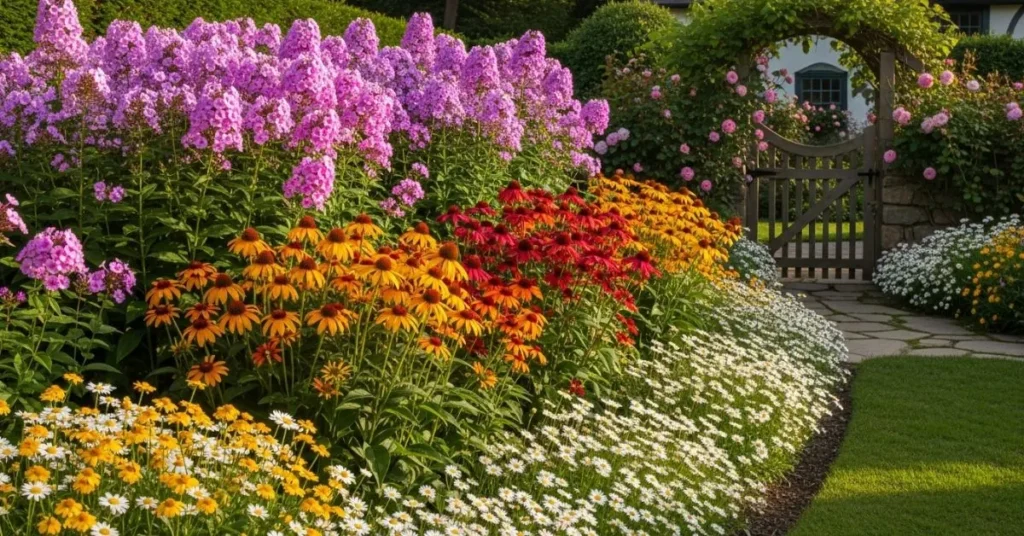
Perennials are versatile, they can frame pathways, fill borders, or act as centerpieces. To design like a pro:
-
Mix fast-growing perennial flowers with slower varieties for balance.
-
Layer tall plants at the back, medium in the middle, and low-growing near edges.
-
Use perennials as fillers to cover bare soil.
A classic cottage garden look combines coneflowers, phlox, and daisies, while a minimalist modern look works well with ornamental grasses and lavender.
Perennial Flowers That Bloom All Summer
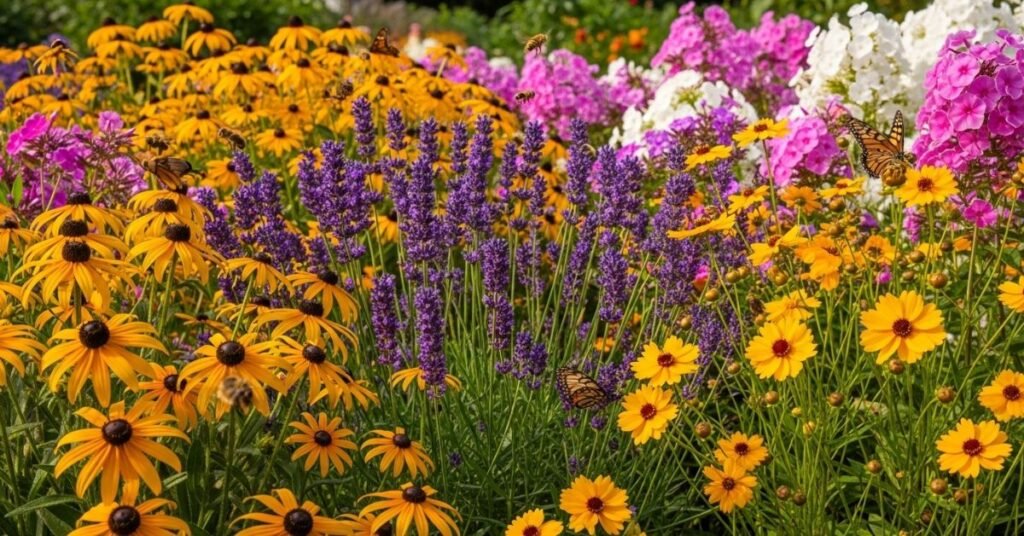
One of the best things about perennials is their long bloom cycles. Some even flower nonstop from June to September.
Top picks:
-
Black-Eyed Susans: Golden-yellow blooms loved by pollinators.
-
Lavender: Beautiful fragrance and a calming look.
-
Coreopsis: Cheerful, daisy-like flowers.
-
Phlox: A mix of colors for borders.
By planting these, you ensure your perennial flower garden looks alive all summer long.
Seasonal Care for Perennials
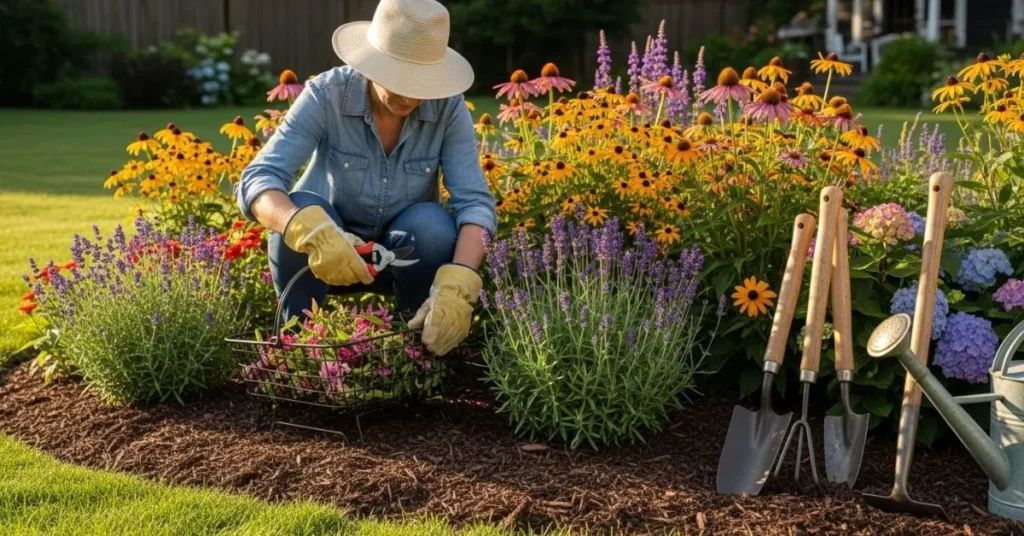
To keep your garden thriving, follow a seasonal care routine:
-
Spring: Clean up dead foliage, divide crowded plants, add fresh mulch.
-
Summer: Regular watering, deadheading spent blooms, watch for pests.
-
Fall: Cut back faded stems, add compost, plant new perennials.
-
Winter: Protect sensitive plants with mulch or covers.
Timing matters with edibles too—if you grow tomatoes alongside flowers, make sure you know When to Pick Tomatoes.
Filling Bare Spots with Perennials
Every garden has empty spaces, but perennials are a quick fix. Hardy varieties like hostas, sedum, and daylilies spread naturally, covering gaps and reducing weeds.
👉 For larger areas, consider lawn alternatives too. Our guide on Green Lawn Care Tips will help you balance grass and flowers.
Tips for Long-Term Success
-
Plan Ahead: Choose plants that suit your climate.
-
Mix Types: Combine flowers, herbs, and shrubs for variety.
-
Rotate Planting: Refresh soil nutrients by alternating areas.
-
Add Mulch: Helps retain moisture and suppress weeds.
For year-round beauty, explore our Flowers and Plants category, it’s full of inspiration.
Conclusion
Building a pet-friendly garden or filling your yard with reliable perennial flowers doesn’t have to be complicated. With just a little effort, these plants will bring lasting beauty, seasonal blooms, and low-maintenance charm to your outdoor space.
Start small, experiment with a few easy varieties, and soon you’ll find your garden evolving into a colorful, thriving retreat. Whether you’re planting for pollinators, filling bare corners, or designing a front yard that turns heads, perennials are always the right choice.
👉 Ready to begin? Visit our Seeds and Planting section for more inspiration and practical guides. Your dream perennial garden is just a few steps away!
FAQs How to Grow Perennial Flowers
[sp_easyaccordion id=”650″]