
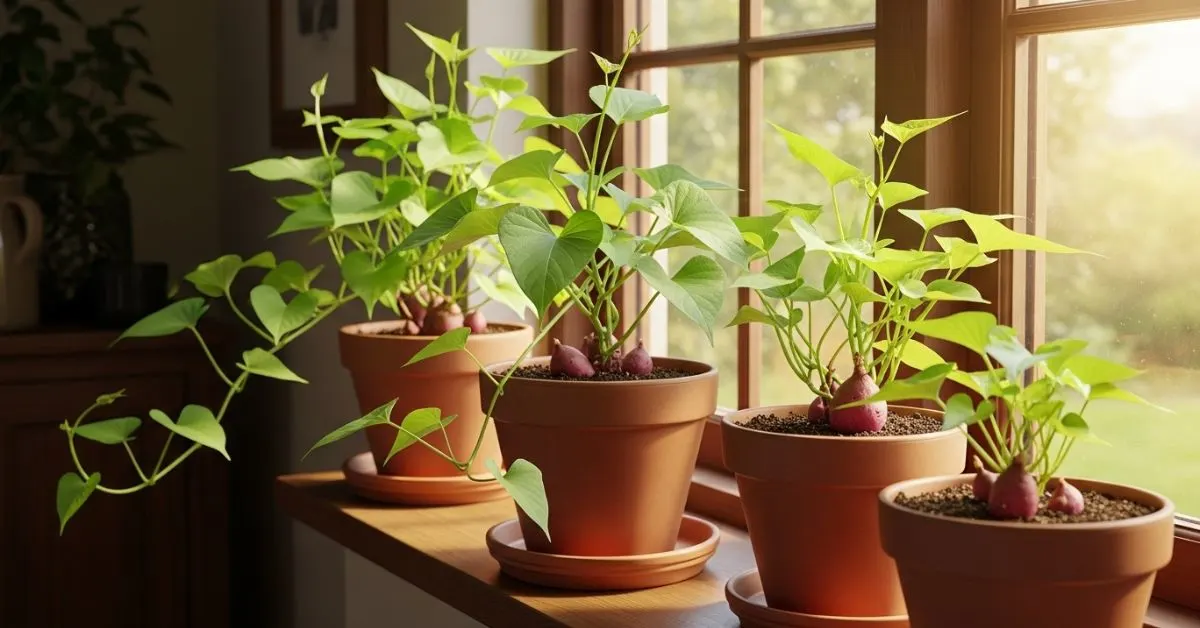
How to Grow Sweet Potatoes Indoors So You Can Enjoy Them Year-Round
If you’ve ever wished for fresh, homegrown sweet potatoes no matter the season, learning how to grow sweet potatoes indoors might be your next favorite gardening project. Sweet potatoes are surprisingly adaptable, and with the right setup, you can harvest them from a sunny windowsill or grow tent all year long.
Unlike typical potatoes, sweet potatoes thrive in warmth and light. So when you grow them indoors, you can control both, keeping them growing happily even in winter. Let’s walk through everything you need to know, from sprouting slips to harvesting your own delicious tubers inside your home.
Understanding the Sweet Potato Plant
Sweet potatoes (Ipomoea batatas) are tropical vines that love warmth, sunlight, and loose soil. They’re not true potatoes; instead, they belong to the morning glory family. That means they need a bit of extra heat and light compared to regular root vegetables.
Growing them indoors lets you:
-
Extend the growing season beyond summer.
-
Avoid pests like nematodes and beetles.
-
Maintain a consistent temperature and moisture level.
-
Enjoy fresh greens (yes, sweet potato leaves are edible!).
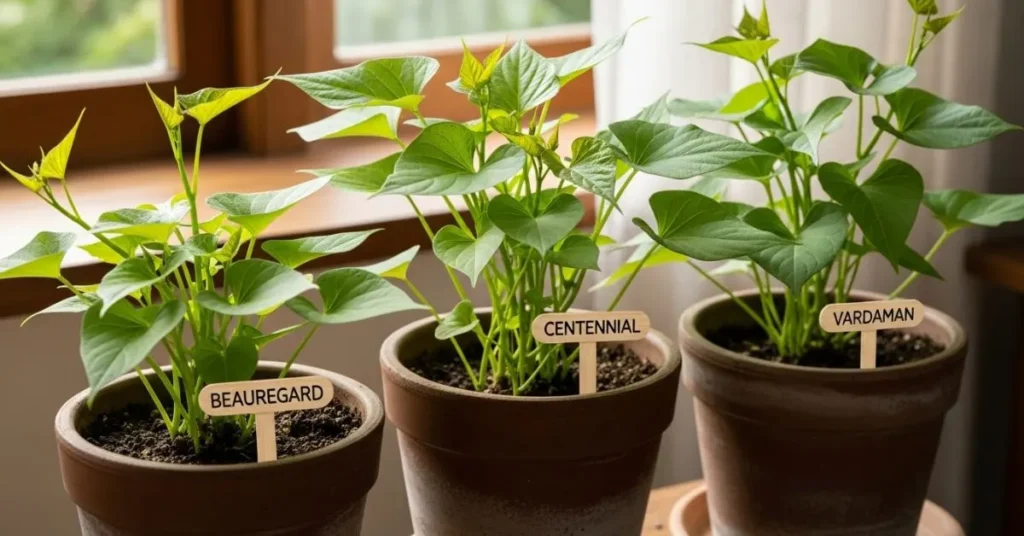
For best results, use compact or bush varieties such as:
-
Beauregard: fast-growing and reliable.
-
Centennial: perfect for containers.
-
Vardaman: compact vines with great yields.
Getting Started: How to Grow Sweet Potatoes Indoors
Before you dive in, remember that how to grow sweet potatoes indoors depends on three essentials: light, temperature, and container space. If you provide these, your plants will reward you with healthy growth and tasty roots.
Step 1: Sprout Sweet Potato Slips
You can start slips from store-bought sweet potatoes. Choose organic ones to avoid chemical sprout inhibitors.
Here’s how to do it:
-
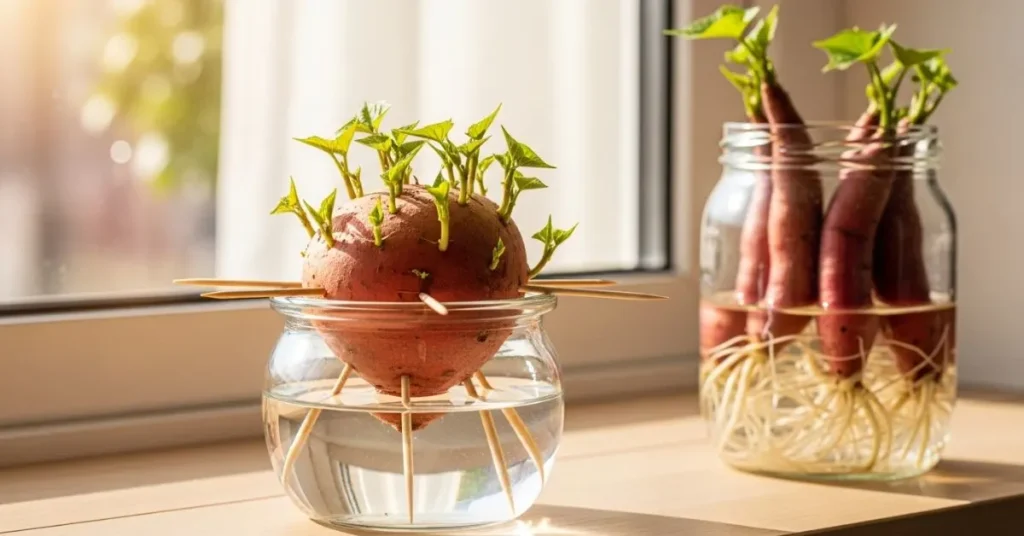
Cut your sweet potato in half.
-
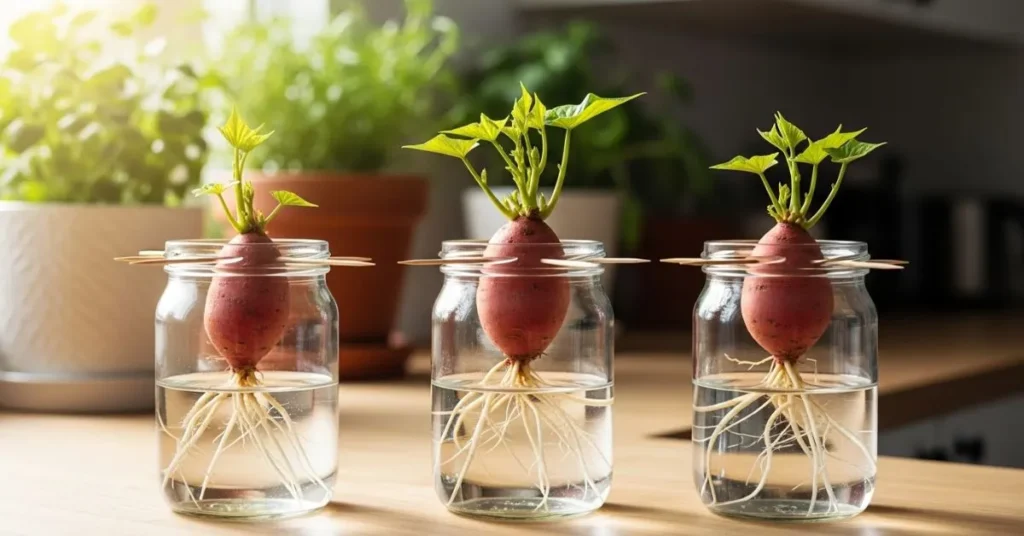
Suspend it in a jar of water using toothpicks, so half remains above water.
-
Place it near a warm, sunny window.
-
Change the water every 2–3 days.
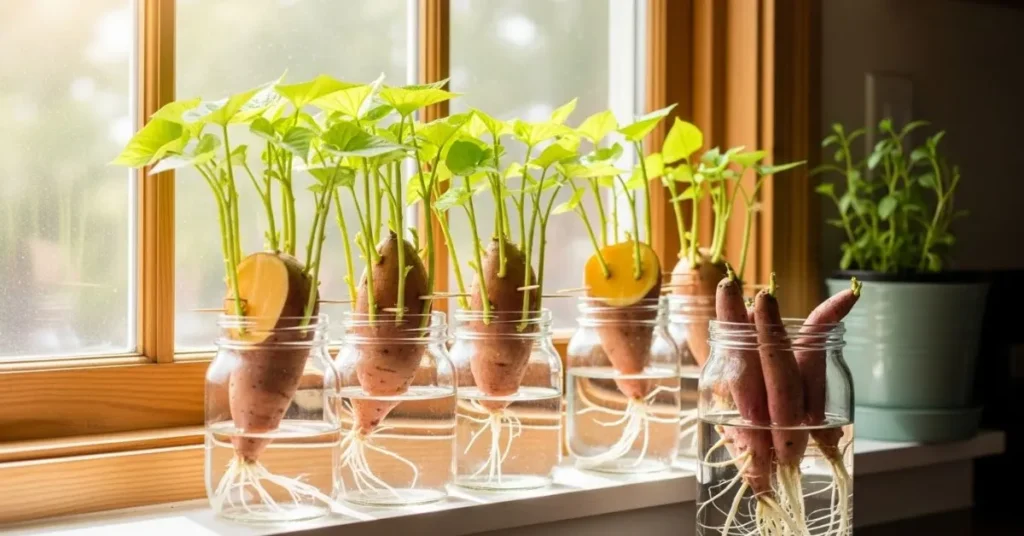
After about 2 weeks, you’ll notice shoots emerging from the top. When they reach 5–6 inches long, twist them off and place them in a separate jar of water. Within a few days, they’ll grow roots—these rooted shoots are your slips.
💡 Tip: You can also buy pre-started slips online if you prefer to skip this step.
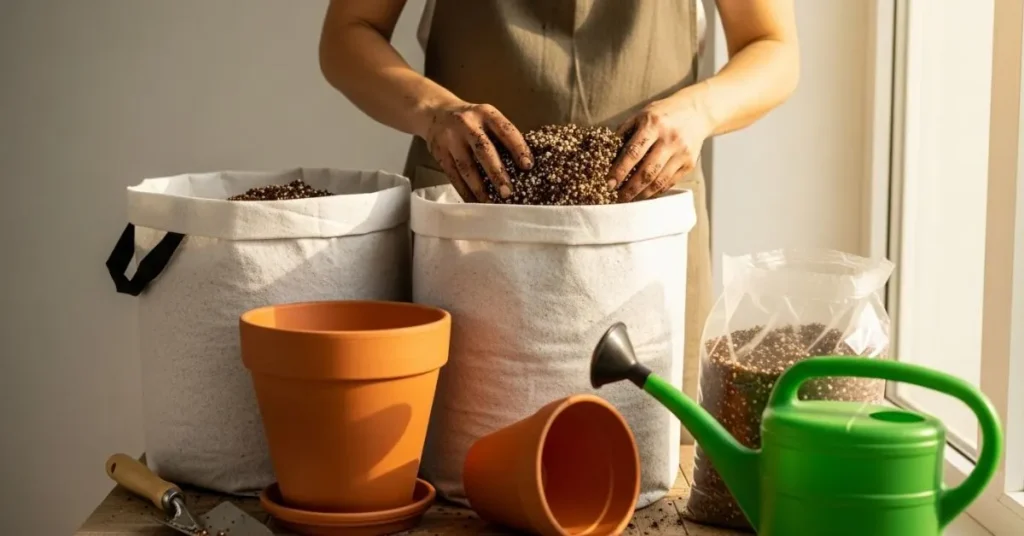
Step 2: Prepare Containers and Soil
Sweet potatoes need plenty of room for their tubers to develop, so pick containers that are:
-
At least 12 inches deep and 18 inches wide.
-
Made from breathable material (like fabric grow bags or clay pots).
Use a light, loose potting mix made of:
-
1 part compost
-
1 part coco coir or peat moss
-
1 part perlite or coarse sand
Avoid heavy garden soil, it compacts easily and stifles root growth.
Before planting, mix in a slow-release organic fertilizer or compost to give your plants a nutrient boost.
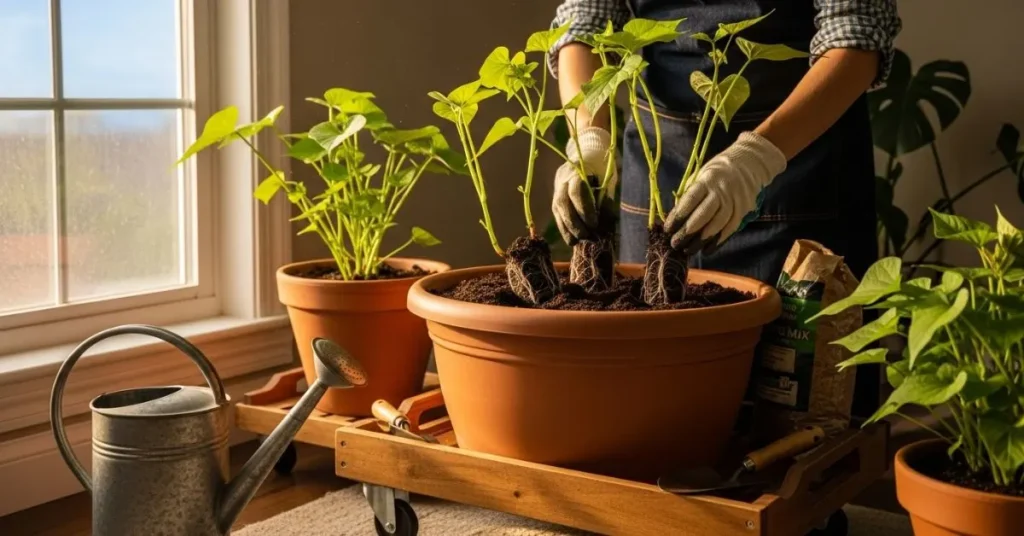
Step 3: Planting Sweet Potato Slips Indoors
Once your slips have roots, you’re ready to plant. Fill your container with soil, leaving 2 inches from the top. Plant each slip about 4–6 inches deep, with at least 10 inches between each if you’re growing multiple in one container.
Water thoroughly after planting, then place the container somewhere that receives at least 6–8 hours of sunlight daily. A bright south-facing window works, or you can use LED grow lights for consistent lighting.
💡 For extra help, check our guide on Indoor Plant Care.
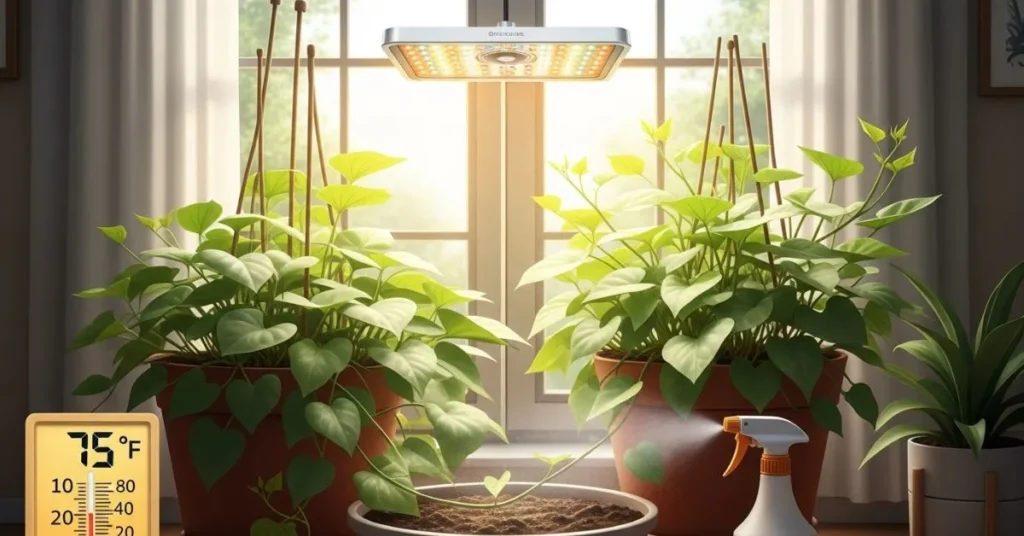
Step 4: Provide Light, Water, and Warmth
Sweet potatoes need warmth to thrive. Keep your indoor temperature between 70°F–85°F (21°C–29°C).
Here’s the maintenance routine:
-
Watering: Keep the soil slightly moist but not soggy. Overwatering can cause rot.
-
Light: Use full-spectrum grow lights for 12–14 hours daily if your window doesn’t get enough sunlight.
-
Humidity: If your home is dry, mist the leaves occasionally.
Once vines start spreading, consider using a small trellis or hanging the vines near the window for better light exposure.
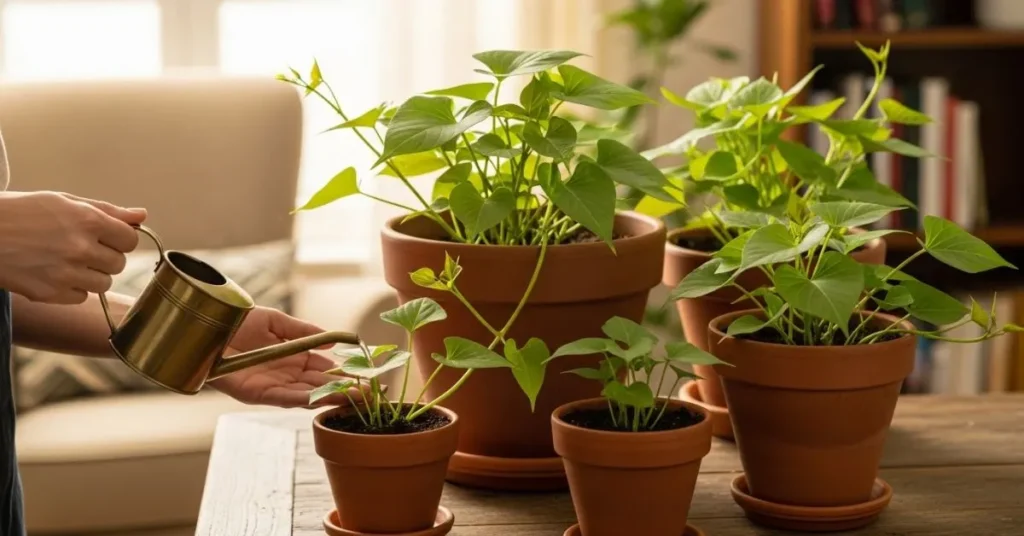
Step 5: Feeding and Care
Feed your sweet potato plants every 3–4 weeks using a balanced organic fertilizer or liquid seaweed solution. Avoid over-fertilizing with nitrogen, or you’ll get lots of leaves and few tubers.
You can pinch off vine tips to encourage bushier growth and save space. The leaves are edible and can be lightly sautéed or added to soups for extra nutrition.
Managing Common Problems Indoors
Even indoors, a few issues might appear. Here’s how to handle them naturally:
| Problem | Cause | Solution |
|---|---|---|
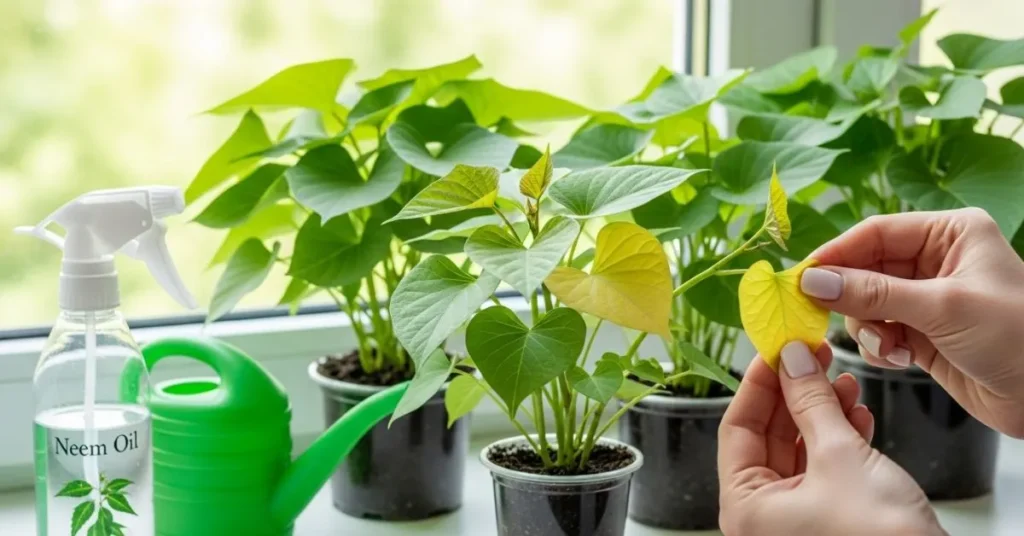
| Yellow leaves | Overwatering or poor drainage | Let soil dry between waterings |
| Slow growth | Low light or cool temperature | Increase light hours and warmth |
| Small tubers | Too small pot or too much nitrogen | Replant in larger container, reduce fertilizer |
| Pests (aphids or mites) | Dry air or weak plants | Mist leaves, wipe with neem oil spray |
Harvesting Your Indoor Sweet Potatoes
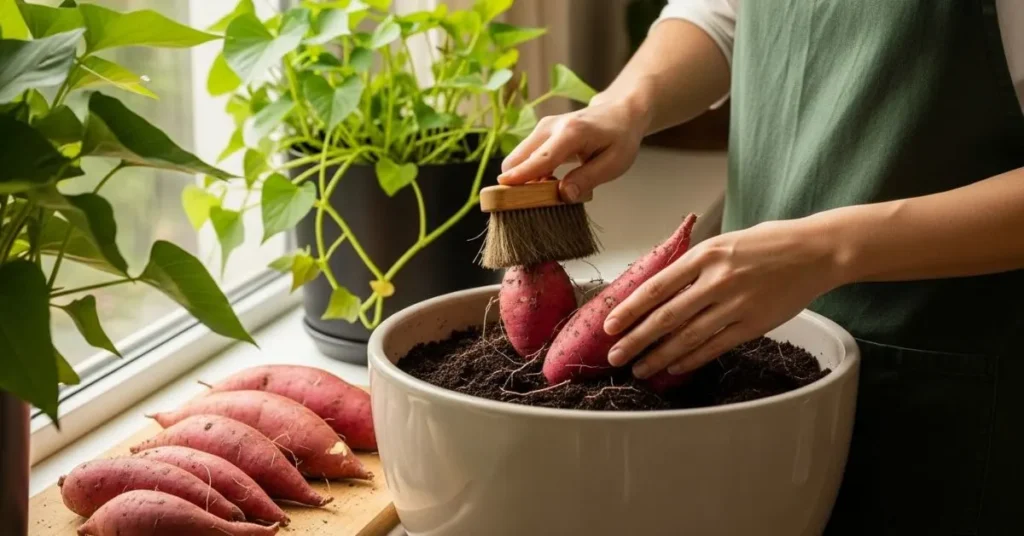
It usually takes 90–120 days for indoor-grown sweet potatoes to mature, depending on the variety. When the vines begin to yellow or slow down, it’s time to check your container.
Gently dig around the soil and remove the tubers without damaging them. After harvest:
-
Let them dry for a few hours.
-
Cure them for 7–10 days in a warm (80°F) and humid place to enhance flavor.
-
Store in a cool, dark area, never refrigerate.
This curing process turns the starches into sugars, giving that classic sweet potato taste.
How to Reuse Slips for the Next Season
After harvest, save a few smaller tubers to regrow slips for the next cycle. Follow the same water-jar method to start new shoots.
You can continue this process year after year, giving you a sustainable indoor crop.
If you enjoy saving seeds and plant material, check our detailed guide on Seeds and Planting.
Benefits of Growing Sweet Potatoes Indoors
Growing sweet potatoes indoors is more than just convenient—it’s rewarding. Here’s why many gardeners love it:
-
Year-round fresh harvests
-
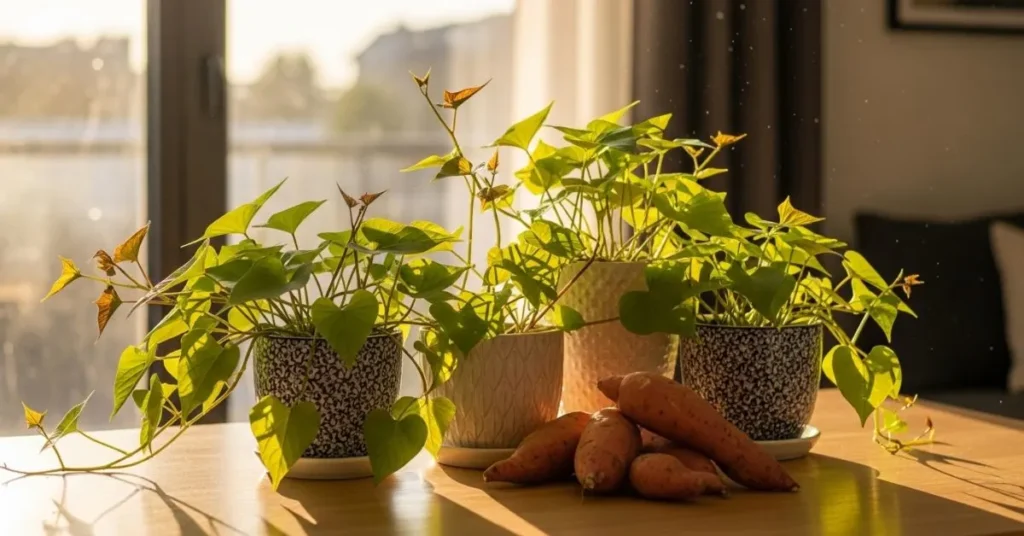
Beautiful trailing vines that double as decor
-
Fewer pest and weather problems
-
Control over soil and nutrients
-
Great for small-space living
You don’t need a large garden, just a bit of patience and care.`
Conclusion
Learning how to grow sweet potatoes indoors is easier than most people think. With the right lighting, temperature, and container setup, you can enjoy your own sweet, nutrient-rich harvest all year long.
Start with a few slips, give them love and care, and soon you’ll have vines climbing your window and fresh tubers ready for your kitchen.
For more indoor and vegetable growing guides, explore our Vegetable Gardening section and discover practical ways to make your home garden thrive.